Beyond the Contract: Integrating Outsourced Teams into Your Company Culture
- 1 min read
Discover how to integrate outsourced teams into your company culture to drive performance, reduce turnover, and ensure long-term strategic alignment in IT delivery.

The Cultural Gap: Why Technical Excellence Isn't Enough
In the current landscape of European digital transformation, many enterprises view IT outsourcing as a purely transactional exchange of code for capital. However, as the complexity of cloud-native architectures and AI-driven workflows increases, the "us versus them" mentality is becoming a significant liability. Technical proficiency alone no longer guarantees project success; the true differentiator in 2026 is cultural integration.
When outsourced teams operate in a vacuum, misalignments in communication styles, decision-making processes, and quality standards inevitably surface. For CTOs and CIOs, ignoring the cultural dimension of outsourcing leads to what we call "friction debt"—a compounding loss of velocity caused by misunderstandings and lack of shared purpose. In an era where agility is paramount, cultural synergy is no longer a "nice-to-have" but a strategic necessity for high-performing IT organizations.
The Strategic Approach: Moving from Vendor to Partner
Successful integration begins with a fundamental shift in perspective: moving from managing a vendor to nurturing a partnership. This requires a structured framework that bridges the gap between the internal core team and the external delivery unit.
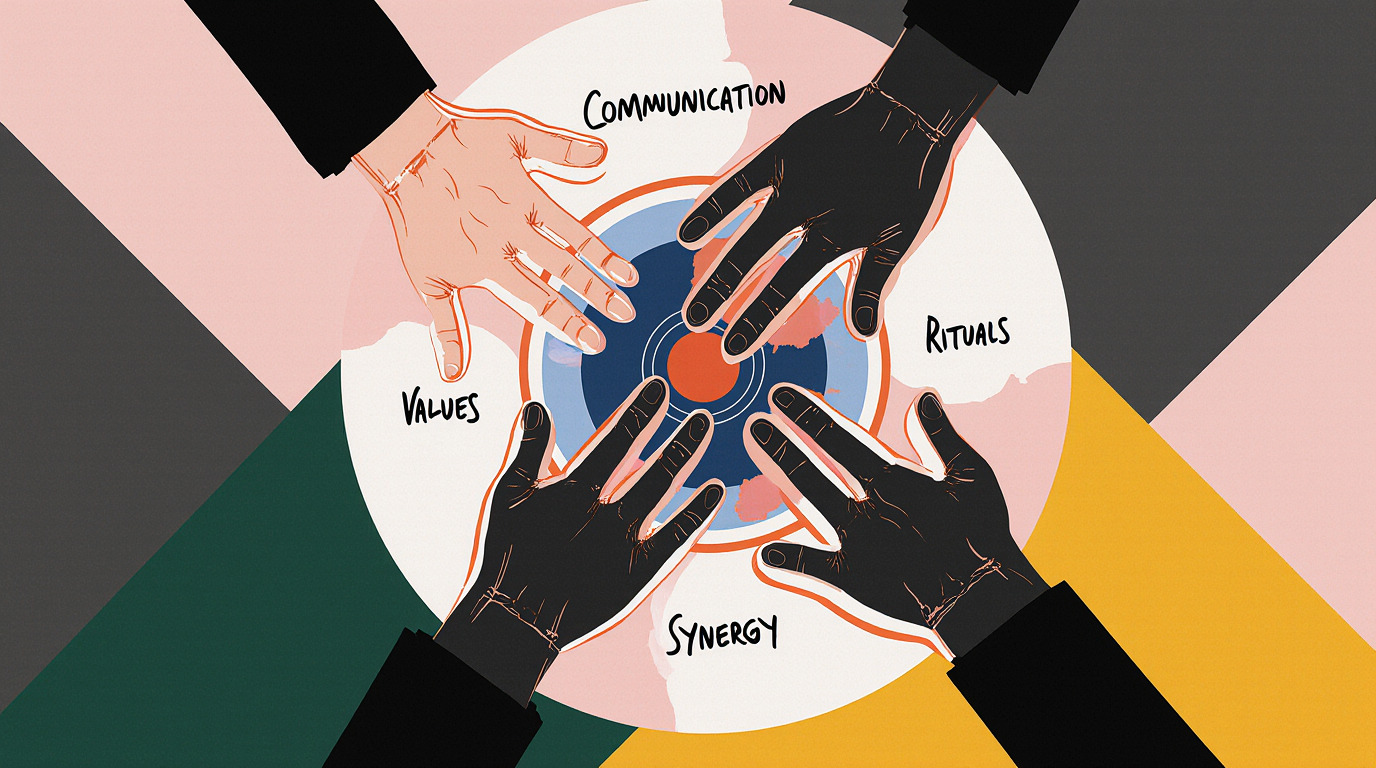
- Unified Communication Channels: Establish a single source of truth for documentation and communication. Whether using Slack, Microsoft Teams, or Jira, the outsourced team must have the same level of access as internal employees.
- Shared Vision and Values: Clearly articulate the "why" behind every project. When engineers understand the business impact of their work, their engagement shifts from task completion to value creation.
- Synchronized Rituals: Include outsourced leads in strategic planning, sprint reviews, and even informal "all-hands" meetings. This visibility fosters a sense of belonging and accountability.
Industry Insight: The Connection Between Culture and ROI
According to Gallup’s recent research, only 28% of fully remote employees feel strongly connected to their company’s mission. In the context of outsourcing, this disconnect can be even more pronounced. However, organizations that prioritize cultural alignment report significantly higher outcomes.
Research from McKinsey indicates that digital transformation outsourcing now represents 70% of total contract values, yet many of these initiatives fail due to organizational silos. Cultural integration acts as the glue that prevents these silos from forming, directly impacting the bottom line through reduced rework and faster delivery cycles.
Euro IT Sourcing Perspective
From our experience working with European technology-driven organizations, we have observed that the most successful projects are those where the boundary between "internal" and "external" is virtually invisible. We believe that a shared cultural framework simplifies communication, allowing for clearer exchanges of ideas and expectations.
At Euro IT Sourcing, we don't just provide talent; we align our delivery models with our clients' operational DNA. We have seen that when our engineers are treated as an extension of the client's team—participating in the same Slack channels and adhering to the same coding philosophies—the velocity of innovation doubles. It is not about changing who the outsourced team is, but about finding the common ground where both cultures can thrive together.
Results and Impact
The impact of successful cultural integration is both qualitative and quantitative. Organizations that master this transition experience:
- Reduced Operational Risk: Shared values lead to better risk assessment and proactive problem-solving.
- Improved Scalability: An integrated team can scale up or down with minimal friction because the onboarding processes are already culturally aligned.
- Enhanced Innovation: Diverse perspectives from an outsourced team, when properly integrated, spark creative solutions that a homogenous internal team might overlook.
Key Takeaways
- Culture is a Performance Lever: Treat cultural alignment as a KPI for your outsourcing partnerships to ensure long-term velocity.
- Transparency is Mandatory: Provide outsourced teams with the same context and business goals as your internal staff to drive engagement.
- Invest in Relationships: Regular face-to-face (or camera-to-camera) interactions build the trust necessary for high-stakes technical execution.
- Standardize the "How": Ensure that coding standards, security protocols, and communication norms are documented and shared across all teams.
Author: Matt Borekci https://www.linkedin.com/in/matt-borekci
Contact Us: https://www.euroitsourcing.com/en/contact

Cultural Fit in IT Sourcing: Aligning Technical Skills with Company Culture
In the rapidly evolving world of IT, sourcing technical talent is a key priority for many organizations. While technical skills are critical, hiring based solely on hard skills can sometimes result in mismatches that affect team dynamics and productivity. **Cultural fit** plays an equally important role in the hiring process. When IT professionals not only have the technical expertise but also align with the company's values and work environment, the result is a more cohesive, innovative, and efficient team.

ICT Outsourcing Explained: Top Models, Benefits, and How It Can Boost Your Business
IT outsourcing involves hiring external providers to manage a company’s IT functions, allowing businesses to focus on their core operations while reducing costs and gaining specialized expertise. The process includes identifying IT needs, choosing an outsourcing model (like staff augmentation or project-based outsourcing), selecting a partner based on expertise and reliability, signing a contract with defined scopes and SLAs, implementing and collaborating with the outsourced team, and monitoring performance. Benefits of IT outsourcing include cost savings, access to global talent, scalability, and faster time-to-market. The right model and partner selection are crucial for long-term success.