Copper: The Metal Powering the Electrified World
- 1 min read
Why copper is critical in 2026: electrification, EVs, power grids, AI infrastructure, and whether copper is the most strategic metal today.
Introduction
Recent moves in copper prices have reignited an old but increasingly relevant question: what makes copper so valuable, and why does it matter more today than ever before?
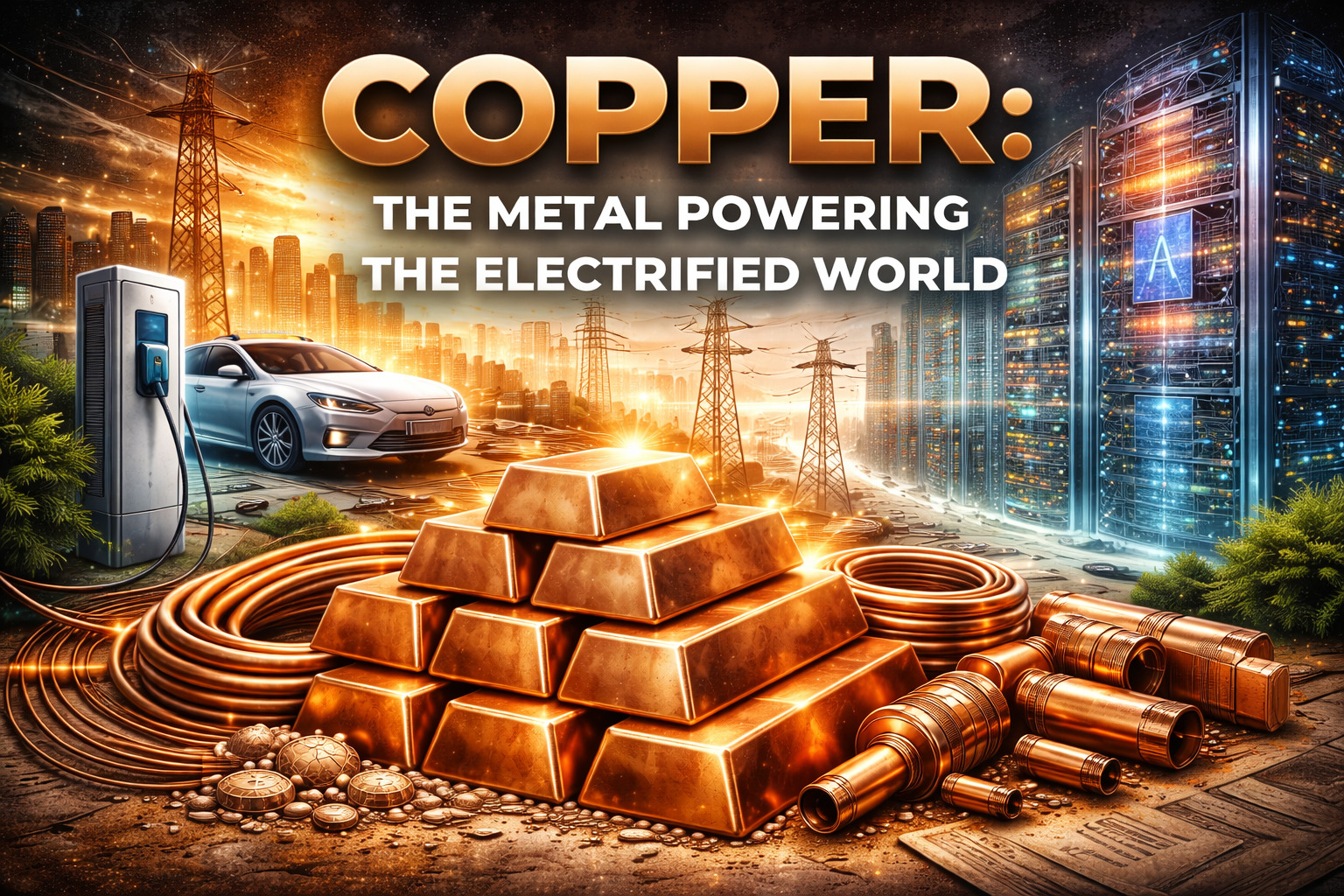
Unlike gold or silver, copper’s value does not primarily come from symbolism or monetary history. Its importance comes from something far more concrete: utility. From the first tools of early civilizations to modern EVs, power grids, data centers, and AI infrastructure, copper has quietly become the circulatory system of modern technology.
As the global economy moves toward electrification, decarbonization, and digitalization, copper is no longer just an industrial input, it is a strategic resource.
Why Copper?
A Metal We Could Work With Early, And Never Replaced
Copper is one of the first metals humanity learned to work with. Its relatively low melting point, malleability, and natural occurrence made it accessible even in early technological stages. But what makes copper remarkable is not just that we adopted it early, it’s that we never found a true substitute.
Copper combines several rare properties:
- Exceptional electrical conductivity
- High thermal conductivity
- Strong corrosion resistance
- Easy recyclability without loss of performance
Aluminum can replace copper in some applications, but with trade-offs in durability, efficiency, and safety. In high-performance systems—EV motors, fast chargers, transformers, semiconductor fabrication—copper remains unmatched.
Scarce Enough to Matter, Abundant Enough to Build Civilization
Copper occupies a perfect middle ground:
- Not so rare that it becomes impractical
- Not so abundant that it loses strategic value
Major copper deposits are geographically concentrated, often in politically sensitive regions. This creates supply rigidity, long permitting timelines, and structural bottlenecks, factors that increasingly influence price dynamics.
The Electrification Trap (Price Games Without Calling It a Conspiracy)
Large economies don’t just consume copper, they depend on it.
Electrification policies in the US, EU, and China have created a structural demand surge:
- Electric vehicles use 3–4x more copper than internal combustion cars
- Renewable energy systems are far more copper-intensive than fossil fuel alternatives
- Power grids require massive upgrades to handle decentralized generation and EV charging
Here’s the uncomfortable question:
Can governments and institutions talk down copper prices in the short term while quietly securing long-term supply?
Unlike gold, copper cannot be easily stockpiled without cost. Warehousing, financing, and logistics matter. This allows futures markets, inventory reporting, and macro narratives (“China slowdown”, “recession fears”) to temporarily suppress prices—even as physical demand keeps rising.
This isn’t a conspiracy; it’s how strategic commodities behave when financial markets collide with physical reality.
Does Copper Have a “Fair Value”?
Copper’s valuation is less emotional than gold’s but more complex.
There is no single “fair price,” but several indicators help frame it:
- Cost curve analysis: many new copper projects only make sense above certain price levels
- Inventory-to-demand ratios: global copper inventories remain historically tight
- Capex cycles: underinvestment in mining during the past decade limits future supply
- Electrification intensity metrics: copper demand per unit of GDP is rising again after decades of decline
Copper also behaves differently during crises. While gold spikes during fear, copper reflects confidence in future activity. When copper prices rise sustainably, markets are often signaling long-term growth expectations rather than panic.
Long-Term Value, Short-Term Volatility (Not Investment Advice, Just Reality)
Copper is unlikely to ever become irrelevant. In fact, the opposite seems true: every credible energy-transition scenario requires significantly more copper than today’s supply system comfortably provides.
That said, copper is cyclical:
- Sensitive to global growth
- Exposed to China’s industrial cycles
- Vulnerable to short-term macro narratives
This makes copper a powerful—but volatile—component of a diversified portfolio. As the old financial rule goes: don’t bet everything on a single metal, no matter how essential it looks.
Balanced exposure beats blind conviction.
Copper Is Revaluing. Talent Isn’t (Yet).
Copper prices may already be reflecting the electrified future.
Engineering talent, however -especially young, highly skilled developers from Eastern Europe—has not gone through the same kind of revaluation. At least not yet 🙂
While companies compete aggressively for strategic resources like copper, many still underestimate the leverage of efficient, well-structured engineering teams.
If you’re building products, platforms, or infrastructure and want to move before the market catches up, now is still a good time.
Get in touch. Let’s build something solid—before everything gets repriced.
Author and Contact
Author: Matt Borekci Contact Us: Euro IT Sourcing

Turkish Tech Renaissance: The Remarkable Growth of the IT Industry
Turkey's IT industry is rapidly growing, driven by its strategic geographic location, a young and educated workforce, and strong government support. The country's thriving startup ecosystem, emphasis on digital transformation, and increasing IT exports are positioning Turkey as a significant player in the global technology landscape. This growth trajectory highlights Turkey's potential and ambition in shaping the future of technology both domestically and internationally.

TURKIYE: The Rising Star of IT Outsourcing
Turkey is quickly becoming a key player in the IT outsourcing industry, thanks to its strategic location, skilled workforce, and cost-effective solutions. Positioned between Europe and Asia, Turkey offers businesses access to top-tier IT talent at competitive prices, with minimal language and cultural barriers. The country's commitment to data protection and innovation further enhances its appeal as a reliable and cutting-edge IT outsourcing partner.