From Analyst to Expert: How to Build a Career in Cyber Security
- 1 min read
Learn how to build a successful cyber security career - from analyst to expert - with skills, certifications, and strategic growth paths.
Why Cyber Security Careers Are No Longer Linear
Cyber security is no longer a niche IT discipline. It is a board-level priority.
Across Europe, regulatory pressure, ransomware activity, and digital transformation initiatives are reshaping enterprise risk models. Frameworks such as the NIST Cybersecurity Framework and standards like ISO 27001 now influence how organizations structure security teams.
For professionals, this shift creates both opportunity and complexity. The path from analyst to expert is no longer automatic. It requires strategic skill development, domain specialization, and business alignment.
At Euro IT Sourcing, we observe that European enterprises increasingly seek security professionals who combine technical depth with governance and operational awareness.
The Early Stage: Building Foundations as a Cyber Security Analyst
Most careers begin in roles such as:
- SOC Analyst
- Security Operations Analyst
- Incident Response Analyst
- Junior GRC Specialist
At this stage, the focus is operational.
Core competencies include:
- Log analysis and SIEM tools
- Threat detection and triage
- Vulnerability assessment
- Basic incident response procedures
- Understanding of networking fundamentals
Certifications such as Security+, CEH, or ISO 27001 Foundation can accelerate credibility. However, practical exposure matters more than theory.
European enterprises increasingly expect familiarity with regulatory landscapes such as GDPR and NIS2. Security is both technical and legal.
Strategic Skill Expansion: Moving Beyond Operations
To evolve from analyst to expert, professionals must expand in three dimensions:
1. Technical Depth
This may include:
- Advanced threat hunting
- Cloud security architecture
- Red team or blue team specialization
- DevSecOps integration
- Zero Trust implementation
Knowledge of structured frameworks such as NIST helps align technical decisions with business objectives.
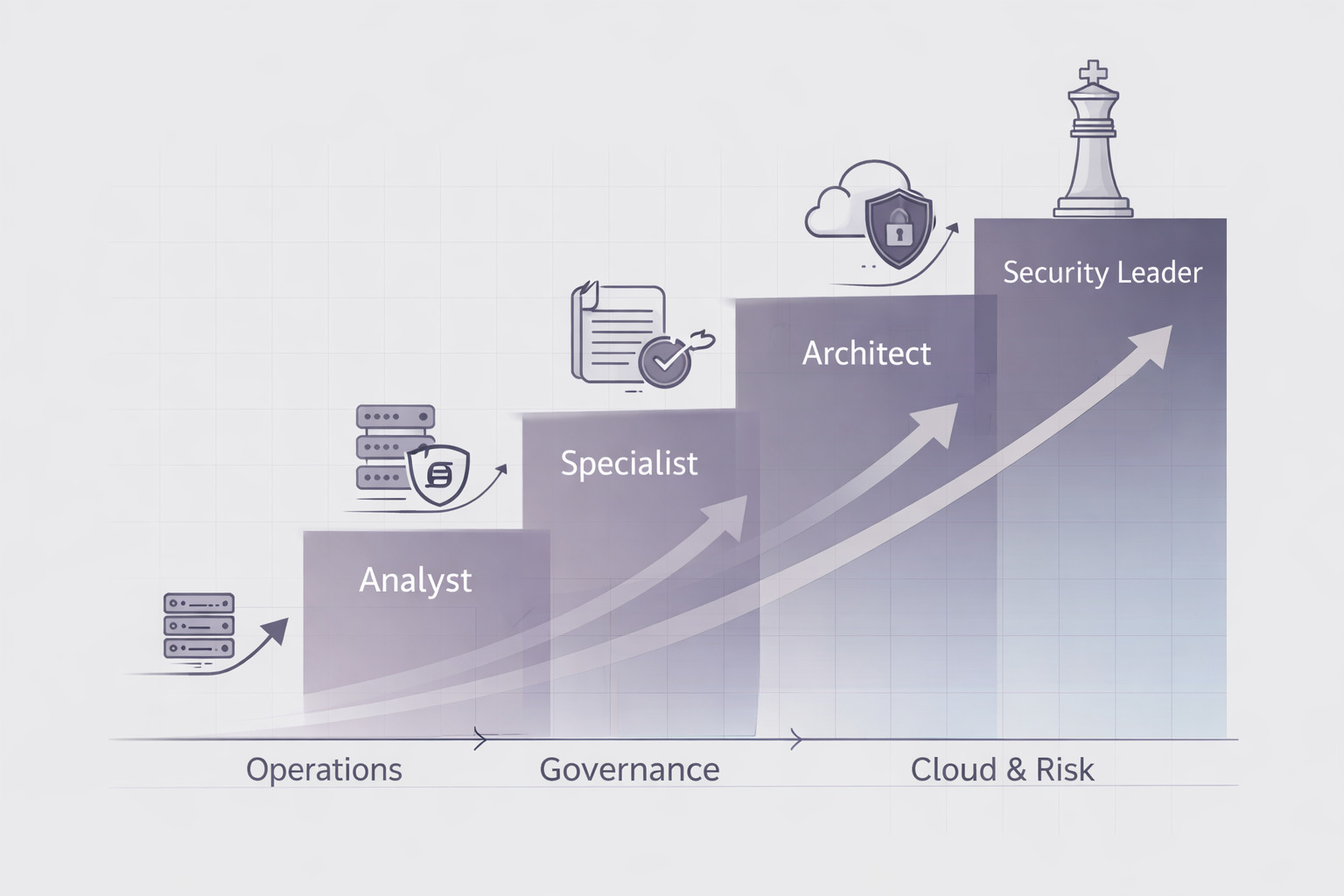
2. Governance and Risk Understanding
Senior roles require:
- Risk assessment methodologies
- Policy design
- Audit preparation
- ISO 27001 implementation
- Vendor risk management
Cyber security experts operate at the intersection of compliance, technology, and strategy.
3. Business and Communication Skills
Experts translate risk into financial and operational impact.
They must:
- Communicate with executive stakeholders
- Support procurement decisions
- Contribute to digital transformation programs
- Align with enterprise architecture strategy
Without business fluency, technical mastery alone limits growth.
The Delivery Model Shift: Security in a Hybrid and Distributed Europe
European enterprises increasingly operate with:
- Remote engineering teams
- Cross-border cloud infrastructure
- Distributed SOC operations
- Outsourced or nearshore security functions
This environment demands adaptability.
Security professionals must understand:
- Secure collaboration models
- Cloud-native security controls
- Cross-jurisdiction compliance requirements
- Automation and AI-driven monitoring
The career path today is shaped by how well professionals adapt to hybrid delivery ecosystems.
Industry Insight
According to research from McKinsey, cyber security spending continues to grow faster than overall IT budgets, driven by escalating threat complexity and regulatory expansion.
The European Union Agency for Cybersecurity highlights that ransomware and supply chain attacks remain among the most significant risks to enterprise stability.
Meanwhile, Gartner projects that organizations will increasingly consolidate security platforms to reduce complexity and cost.
The implication is clear: future experts will not only understand tools - they will design integrated security ecosystems.
Euro IT Sourcing Perspective
From our experience working with European technology-driven organizations, the most successful cyber security experts share three characteristics:
- Structured framework thinking
- Cross-functional communication capability
- Continuous upskilling in cloud and automation domains
We consistently see demand shift from reactive incident response toward proactive architecture and governance alignment.
Organizations do not only need analysts. They need strategic security partners.
Results and Career Impact
Professionals who intentionally structure their growth can achieve:
- Faster progression into senior roles
- Higher compensation bands
- Broader project ownership
- Influence in digital transformation programs
- Reduced career stagnation risk
For enterprises, hiring security professionals with both operational and strategic capability leads to:
- Stronger compliance posture
- Reduced incident recovery time
- Lower long-term security costs
- Improved board-level risk visibility
Cyber security maturity directly correlates with enterprise resilience.
Key Takeaways
- Cyber security careers require structured progression, not random skill accumulation
- Technical depth must be paired with governance and business understanding
- Framework literacy such as NIST and ISO 27001 is essential in Europe
- Cloud and hybrid security expertise accelerates career advancement
- Communication skills differentiate analysts from future security leaders
Author & Contact
Author: Matt Borekci https://www.linkedin.com/in/matt-borekci
Contact Us: https://www.euroitsourcing.com/en/contact
What Does a Cyber Security Expert Do? A Complete Guide
Discover what a cyber security expert does, their roles, skills, and how they protect businesses from digital threats.

How Much Does a Cyber Security Expert Earn? Salary Insights for 2025
Explore 2025 cybersecurity salary trends, including global averages, roles in demand, and how outsourcing impacts IT security hiring.