How to Train Your Team to Think Like a Cyber Security Expert
- 1 min read
Empower your team to anticipate threats and secure systems with practical cyber security training tailored for modern European enterprises.
Why Developing a Security Mindset Is Critical Today
Cyber threats are evolving faster than ever. European enterprises face sophisticated attacks that exploit human and technical vulnerabilities alike. Traditional IT training is no longer enough; teams must adopt a security-first mindset.
Employees who can anticipate risks, recognize threats, and respond effectively are the first line of defense. Fostering this mindset reduces operational risk, strengthens compliance, and enhances resilience across digital systems.
The Challenge: Human Factors in Cyber Security
Many security breaches stem from human error:
- Weak passwords or credential reuse
- Falling for phishing or social engineering attacks
- Misconfiguring systems or bypassing security protocols
- Lack of awareness about emerging threats
According to ENISA, organizations that embed awareness training and simulations report a 50% decrease in successful phishing attempts.¹
Strategic Approach to Training Your Team
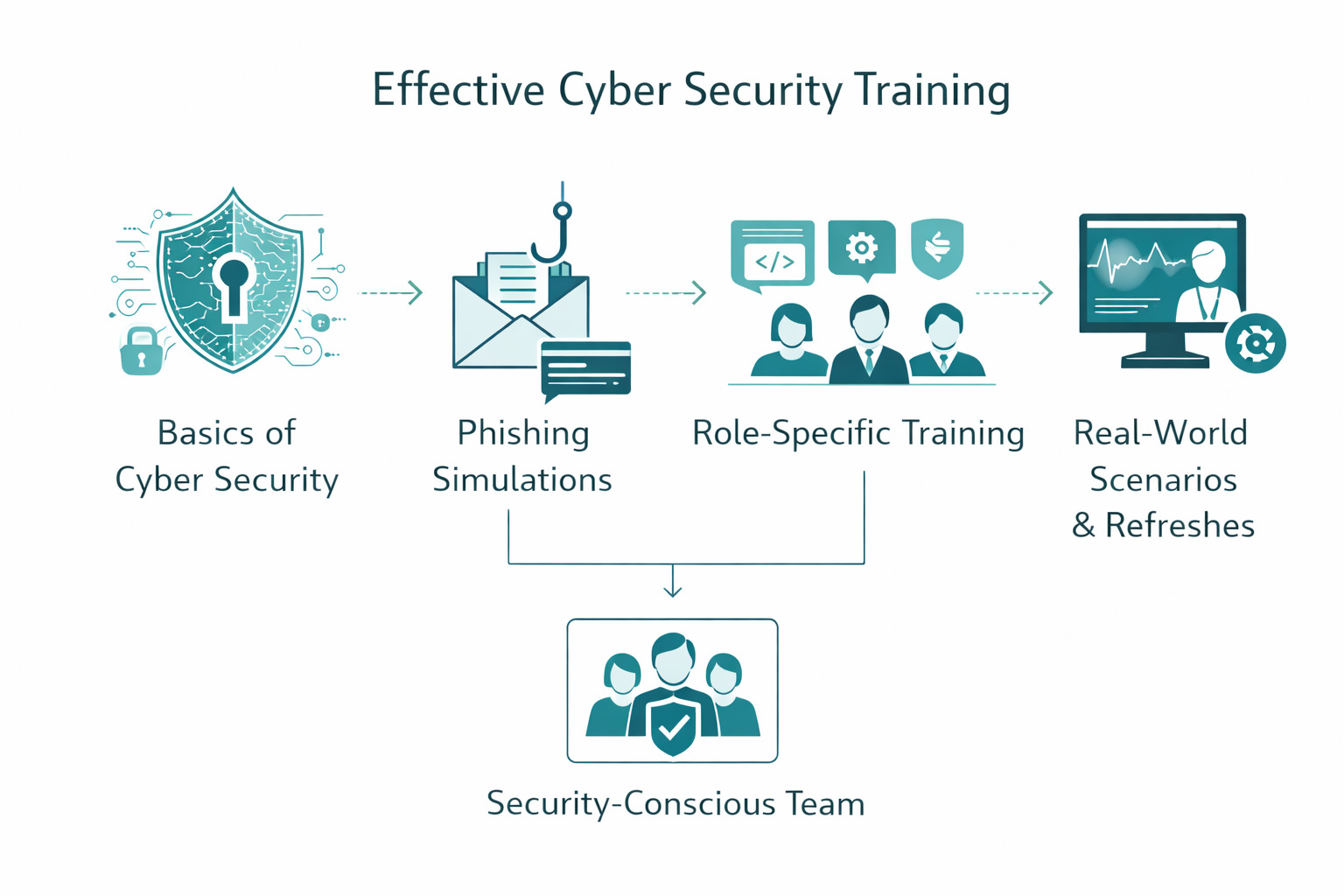
Cybersecurity is as much a cultural shift as it is technical training. Key steps include:
- Foundational knowledge: Cover core concepts such as authentication, encryption, malware types, and attack vectors.
- Practical simulations: Conduct phishing tests, tabletop exercises, and red-team/blue-team drills.
- Role-specific training: Developers, system admins, and executive staff need tailored guidance.
- Continuous learning: Threat landscapes evolve; refresh training regularly with real-world scenarios.
Embedding security into daily workflows ensures employees make secure choices without slowing productivity.
Tools, Methods, and Delivery Models
Modern training approaches combine digital platforms with interactive exercises:
- Learning management systems (LMS) for structured modules and assessments.
- Gamified cybersecurity platforms that simulate attacks.
- Micro-learning content for short, actionable lessons.
- Automated threat alerts and newsletters to reinforce awareness.
- Integration with DevSecOps pipelines to train developers on secure coding practices.
Selecting the right mix depends on team size, industry regulations, and organizational culture.
Risks and Trade-Offs to Consider
Training initiatives require careful planning:
- Overloading staff can reduce adoption.
- Generic programs may fail to resonate with European compliance standards (GDPR, NIS2).
- Neglecting measurement prevents evaluation of effectiveness.
Mitigation strategies include scheduling regular, bite-sized sessions, customizing content per role, and monitoring KPIs like phishing test results and incident response performance.
Industry Insight: Cyber Security Skills Gap
McKinsey reports that the cybersecurity skills gap continues to widen, with demand for trained staff outpacing supply.² European organizations investing in proactive training report stronger incident response, reduced downtime, and improved regulatory compliance.
Data from ENISA emphasizes that human-focused interventions remain the most cost-effective method to prevent breaches.³
From Our Experience Working With European Enterprises
From our engagements:
- Teams that undergo hands-on threat simulations adopt faster response behaviors.
- Developers trained in secure coding contribute to fewer vulnerabilities in production.
- Executive staff aware of cyber risks prioritize security investments and policy adherence.
Effective programs integrate across departments and treat security awareness as a continuous culture rather than a one-off event.
Results and Impact of Cyber Security Training
Measured outcomes often include:
- Reduced phishing success rates by up to 50%
- Faster incident response and mitigation times
- Improved compliance posture under GDPR and NIS2
- Enhanced employee confidence in identifying and reporting threats
Organizations report that embedding security thinking across teams strengthens resilience and reduces operational risk.
Key Takeaways
- Cybersecurity is a mindset, not just a skill; embed it across teams.
- Training should combine theory, hands-on practice, and role-specific guidance.
- Simulations and micro-learning reinforce behaviors without overwhelming staff.
- Continuous refreshes keep awareness current with evolving threats.
- Measuring effectiveness ensures training delivers tangible risk reduction.
Author: Matt Borekci
https://www.linkedin.com/in/matt-borekci
Contact Us:
https://www.euroitsourcing.com/en/contact
References:
- ENISA - European Union Agency for Cybersecurity: Security Awareness and Training Reports
- McKinsey on Cybersecurity Skills Gap and Enterprise Training
- ENISA Threat Landscape 2025 Reports
What Does a Cyber Security Expert Do? A Complete Guide
Discover what a cyber security expert does, their roles, skills, and how they protect businesses from digital threats.

How Much Does a Cyber Security Expert Earn? Salary Insights for 2025
Explore 2025 cybersecurity salary trends, including global averages, roles in demand, and how outsourcing impacts IT security hiring.