Inside the Mind of a Cyber Security Expert: How They Stop Attacks
- 1 min read
Explore how cyber security experts think, detect threats, and stop attacks before they disrupt modern enterprises.

Introduction
Cyber attacks are no longer isolated technical incidents. They are continuous, adaptive, and business-driven threats targeting data, operations, and reputation.
Behind every prevented breach is a cyber security expert who understands not just technology, but also attacker psychology, system behavior, and risk prioritization. Their work is proactive, analytical, and often invisible to the business.
Understanding how these experts think offers valuable insight into why modern cyber defense relies on process, expertise, and execution discipline, not tools alone.
The Challenge: A Constantly Evolving Threat Landscape
Attackers Move Faster Than Ever
Modern attackers leverage automation, AI-assisted tooling, and global infrastructure. Common challenges include:
- Zero-day vulnerabilities with no prior signatures
- Social engineering targeting employees, not systems
- Supply chain and third-party attack vectors
Security teams must assume compromise attempts are constant, not occasional.
Signal Overload
Enterprises generate millions of security events daily. The challenge is not lack of data, but:
- Identifying what truly matters
- Reducing false positives
- Acting before damage occurs
This is where expert judgment becomes critical.
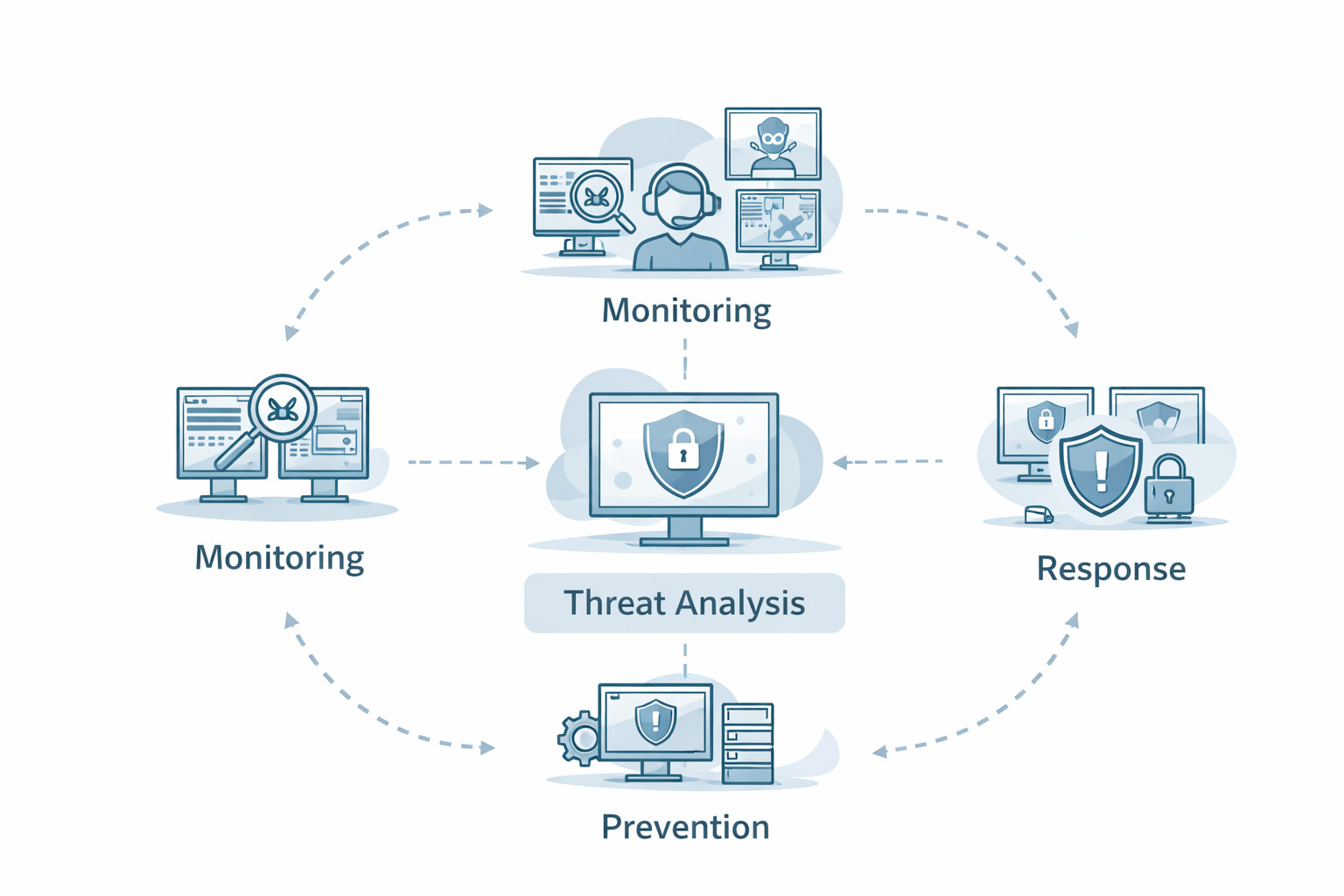
How Cyber Security Experts Think
Threat-Centric, Not Tool-Centric
Experienced professionals focus on attack paths, not isolated alerts. They continuously ask:
- What is the attacker trying to achieve?
- Which assets are most valuable?
- Where is the weakest point in the chain?
This mindset shifts security from reactive to anticipatory.
Risk-Based Decision Making
Not every vulnerability requires immediate action. Experts prioritize based on:
- Business impact
- Exploitability
- Exposure and access paths
This prevents wasted effort and aligns security actions with business objectives.
The Technology Factor
Cyber security experts rely on advanced platforms, but technology supports thinking, not replaces it:
- SIEM and XDR platforms for visibility and correlation
- Endpoint and network detection tools
- Threat intelligence feeds and behavioral analytics
Frameworks such as the NIST Cybersecurity Framework provide structured guidance for detection and response. https://www.nist.gov/cyberframework
ENISA also highlights the importance of skilled professionals in operational cyber resilience. https://www.enisa.europa.eu/topics/cybersecurity-skills
Industry Insight
According to Gartner, organizations that combine advanced detection tools with experienced security analysts reduce breach impact times by more than 40 percent.
McKinsey research shows that human-led threat analysis remains essential, even in highly automated security environments, particularly for complex, multi-stage attacks. https://www.mckinsey.com/capabilities/risk-and-resilience
These findings confirm a clear reality: cyber security maturity depends as much on people as on platforms.
Euro IT Sourcing Perspective
From our experience working with European enterprises, the most effective security programs treat cyber security experts as strategic contributors, not operational overhead.
We consistently see stronger outcomes when organizations:
- Integrate external security specialists into SOC and project teams
- Scale expertise flexibly as threat levels change
- Maintain internal ownership while extending execution capacity
This hybrid model allows businesses to respond faster without overextending internal teams.
Results and Business Impact
Organizations supported by experienced cyber security professionals typically achieve:
- Faster threat detection and response times
- Reduced breach impact and recovery costs
- Improved compliance posture and audit readiness
- Higher confidence at board and executive level
Most importantly, security becomes an enabler of business continuity, not a blocker.
Key Takeaways
- Cyber attacks are continuous and adaptive
- Expert thinking focuses on risk, not alerts
- Technology amplifies expertise but does not replace it
- Human-led analysis remains critical for complex threats
- Scalable access to cyber security experts strengthens resilience
Author & Contact
Author: Matt Borekci
Contact Us: Euro IT Sourcing
What Does a Cyber Security Expert Do? A Complete Guide
Discover what a cyber security expert does, their roles, skills, and how they protect businesses from digital threats.
How Much Does a Cyber Security Expert Earn? Salary Insights for 2025
Explore 2025 cybersecurity salary trends, including global averages, roles in demand, and how outsourcing impacts IT security hiring.