Leveraging AI for Seamless Knowledge Transfer in Global Outsourcing Partnerships
- 1 min read
How AI is transforming knowledge transfer in global outsourcing, reducing friction and accelerating productivity in distributed IT teams.

Why Knowledge Transfer Is the Hidden Bottleneck in Outsourcing Success
Global outsourcing partnerships remain critical to scaling technology delivery. Yet many organizations underestimate a persistent challenge: knowledge transfer friction. When teams are distributed across borders, cultures, and time zones, knowledge gaps slow productivity, increase errors, and inflate costs.
Now more than ever, AI-powered systems are reshaping how enterprises capture, share, and scale institutional knowledge across outsourced teams. This shift is not theoretical; it is a response to the real cost of inefficient knowledge transfer in a competitive digital landscape.
The Challenge: Knowledge Silos in Distributed IT Teams
When knowledge lives in the minds of a few individuals or in unstructured documents, outsourcing outcomes suffer:
- Long onboarding cycles for new outsourced resources.
- Repeated context switching due to unclear documentation.
- Variability in quality when tribal knowledge is informal.
- Delays due to asynchronous communication.
Traditional knowledge repositories often fail because they are static and lack context awareness. According to a recent McKinsey report, organizations that fail to streamline knowledge flows see up to 20 percent lower productivity in distributed teams.
The Strategic Approach: AI as the Knowledge Backbone
AI introduces dynamic intelligence to knowledge transfer in ways static systems cannot:
- Contextual summarization - AI can condense detailed technical discussions into concise, actionable summaries.
- Intelligent search - Natural language search yields answers from knowledge bases without needing exact keywords.
- Adaptive onboarding - AI-tailored learning paths based on team member roles and prior experience.
- Chat-assisted expertise - In-chat AI agents reduce dependency on human intermediaries for routine queries.
Gartner predicts that by 2027, 30 percent of organizations will use conversational AI agents to support corporate knowledge workflows.
Technology in Action: Building an AI-Enabled Knowledge Hub
An effective AI knowledge hub often includes:
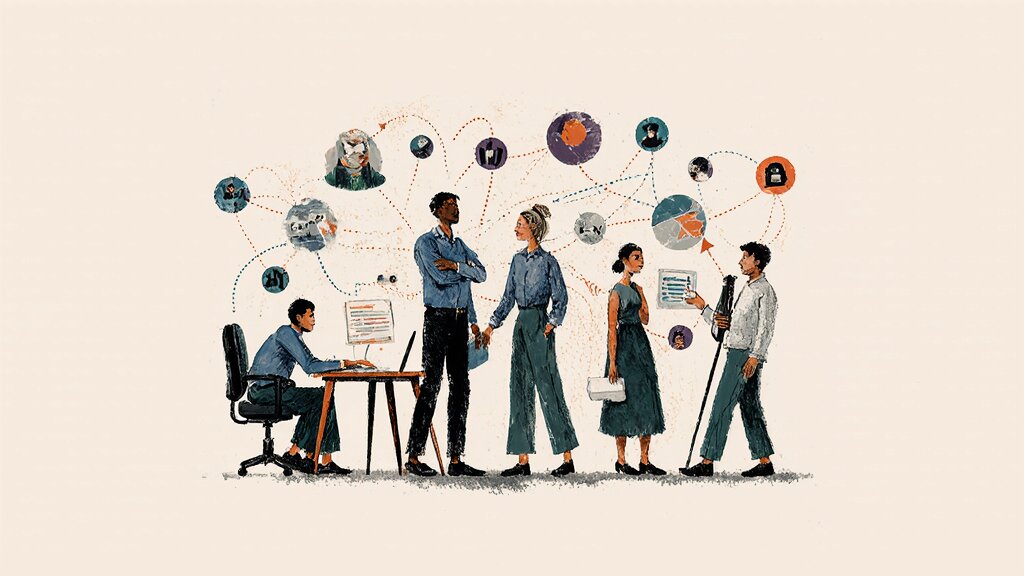
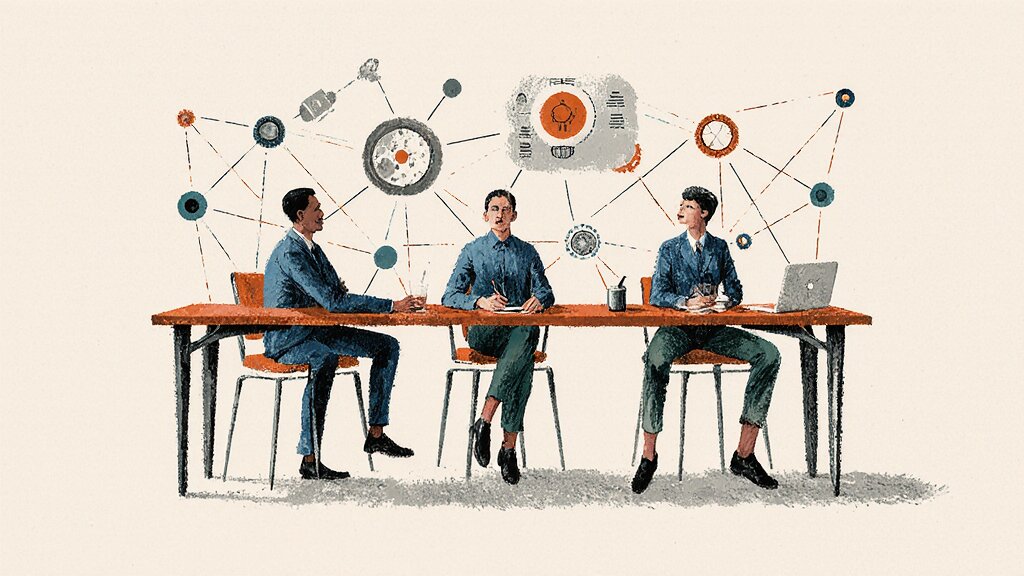
- An AI-enhanced knowledge graph linking documents, code, processes, and experts.
- Automated tagging and classification of artifacts using machine learning.
- Interactive Q&A interfaces for rapid clarification.
- Version-aware context so answers reflect the latest architecture and standards.
Platforms that integrate with communication tools and code repositories create seamless touchpoints for knowledge exchange. This reduces the time developers spend searching for answers, enabling faster delivery cycles.
Risks and Trade-Offs: What Leaders Must Consider
AI is powerful but not a silver bullet:
- Data quality matters - AI reflects the quality of inputs.
- Governance is essential - Without standards, automated summaries can propagate outdated practices.
- Change management - Teams require training to trust and use AI tools effectively.
Balancing automation with oversight ensures AI amplifies human expertise rather than obscuring it.
Industry Insight
Recent industry research shows:
- 75 percent of CIOs rank knowledge transfer and retention as a top barrier to outsourcing efficiency.
- AI-driven knowledge systems reduce onboarding times by 40 percent on average.
- Organizations using intelligent automation report higher satisfaction among distributed teams due to faster resolution of technical queries.
These trends underline a broader shift: knowledge transfer is now a strategic capability, not an administrative task.
From Our Experience Working With European Technology-Driven Organizations
From our work with multinational enterprises and European IT organizations, we observe common patterns:
- Projects with clear, AI-assisted knowledge documentation have fewer defects in later stages.
- Teams that use conversational AI agents see higher engagement from outsourced developers.
- Knowledge transfer that embeds feedback loops accelerates process refinement across partners.
In every case, AI acted as a force multiplier, enabling human experts to focus on high-value work rather than repetitive knowledge sharing.
Results or Impact
When AI is integrated into knowledge workflows:
- Onboarding time shrinks - New resources reach full productivity faster.
- Fewer knowledge bottlenecks - Technical dependencies are resolved rapidly.
- Improved quality - Standardized answers reduce variance in implementation.
- Lower operational risk - Knowledge continuity is preserved even when personnel change.
These outcomes align with industry benchmarks for high-performing global teams and support sustained outsourcing ROI.
Key Takeaways
- AI transforms knowledge transfer from a cost center into a strategic advantage.
- Intelligent summarization and search reduce cognitive friction for distributed teams.
- Governance and data quality are essential to realizing AI’s full potential.
- Measurable improvements in onboarding and productivity are achievable with AI.
Author: Matt Borekci https://www.linkedin.com/in/matt-borekci
Contact Us: https://www.euroitsourcing.com/en/contact
AI-Powered Knowledge Transfer: Solving One of Outsourcing’s Biggest Challenges
Discover how AI-powered knowledge transfer minimizes project delays, boosts collaboration, and ensures seamless handovers in IT outsourcing.

Overlapping Time Zones: Maximizing Collaboration Windows for Distributed IT Teams
How European enterprises maximize productivity in distributed teams by designing effective overlapping time zones for collaboration and delivery.