Mitigating Shadow IT Risks through Strategic ICT Partner Alignment
- 1 min read
Discover how strategic ICT partner alignment can eliminate Shadow IT risks, enhance security, and drive enterprise-scale digital transformation in 2026.
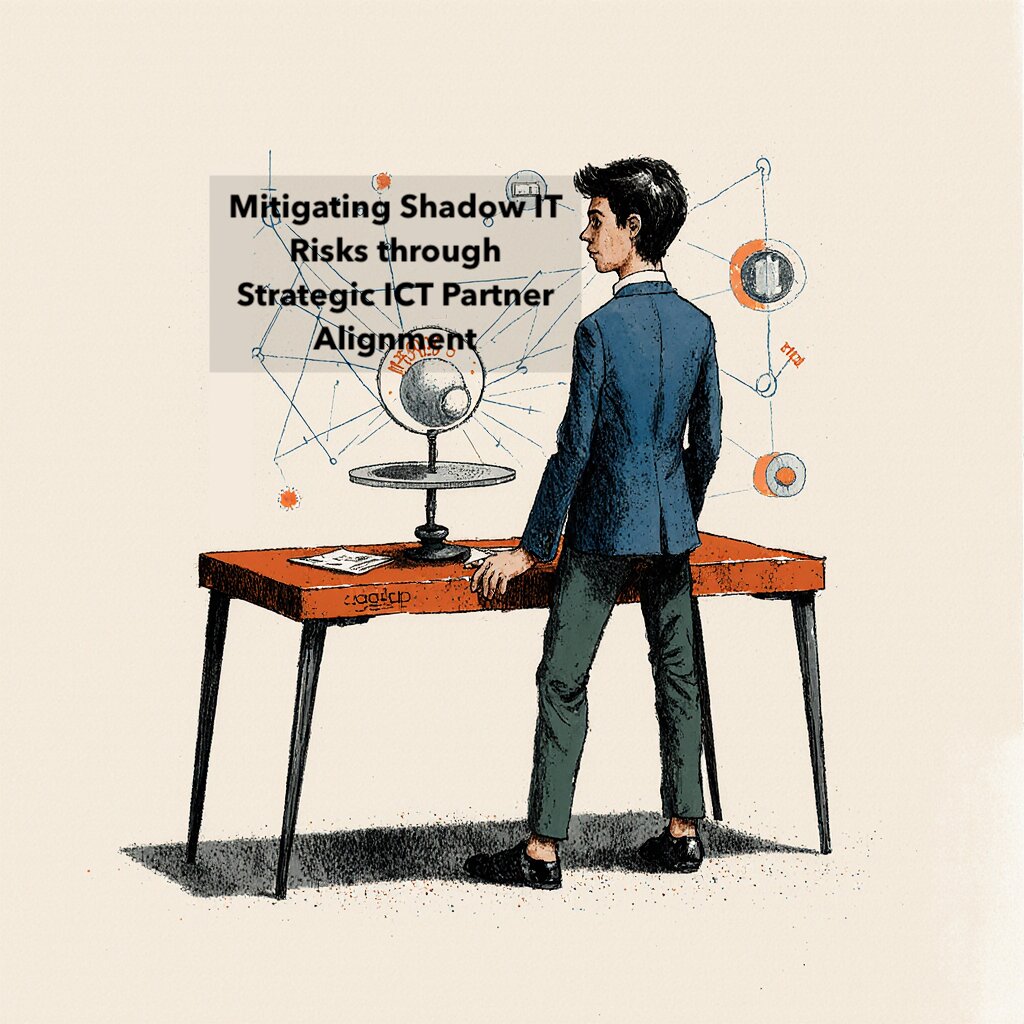
The Invisible Architecture: Why Shadow IT Persists in 2026
In the rapidly evolving digital landscape of 2026, the tension between fostering employee productivity and maintaining stringent IT oversight has never been more pronounced. While employees often adopt unsanctioned applications to streamline workflows and enhance efficiency, these unapproved tools, collectively known as Shadow IT, introduce significant security risks and compliance challenges. The emergence of "Shadow AI"—the unsanctioned use of generative AI tools by employees—further complicates this issue, presenting new data privacy and breach vulnerabilities [1]. Traditional, rigid IT governance models are increasingly proving inadequate in the face of this dynamic environment, particularly within large European enterprises navigating complex digital transformations.
The Hidden Cost of the Unsanctioned Stack
The proliferation of Shadow IT carries substantial hidden costs and risks for organizations. Beyond the immediate security vulnerabilities and potential for data breaches, unsanctioned applications often lead to fragmented data silos, hindering unified data management and analytics efforts. Financially, redundant SaaS subscriptions acquired outside centralized procurement processes can result in significant, often unnoticed, expenditure. Furthermore, the lack of oversight on these tools complicates adherence to critical regulatory frameworks such as GDPR and ISO 27001, exposing companies to legal and reputational damage [2].
Beyond Discovery: The Strategic Alignment Framework
Effectively managing Shadow IT requires a fundamental shift in approach—from IT acting as a mere "policeman" to becoming a strategic "enabler." This involves aligning IT procurement and strategy closely with the evolving needs of business units, fostering a collaborative environment where technology adoption is guided rather than stifled. A strategic ICT partner plays a crucial role in this transformation, bridging the gap between business demands and secure, compliant IT solutions. Such partnerships provide external expertise and frameworks to integrate new technologies safely, ensuring they support organizational goals without compromising security [3].

The Role of Shadow AI and Modern Delivery Models
The rapid adoption of Generative AI has significantly accelerated the growth of Shadow IT. Employees, eager to leverage AI's capabilities, often bypass official channels, leading to unmonitored AI usage that can expose sensitive data and create new attack vectors. To counter this, organizations can implement "safe-to-fail" sandboxes in collaboration with strategic partners. These controlled environments allow for the secure experimentation and integration of new AI tools, providing a structured pathway for innovation while mitigating risks. This approach enables businesses to harness the power of AI responsibly, transforming potential threats into strategic advantages.
Navigating the Trade-offs: Security vs. Agility
Finding the optimal balance between stringent security measures and the agility required for innovation is a critical challenge in Shadow IT management. Over-regulation can stifle productivity and drive employees further towards unsanctioned solutions, while excessive decentralization can lead to unmanageable risks. The goal is to identify the "Goldilocks Zone" of governance—a framework that provides sufficient control to protect assets and ensure compliance, yet remains flexible enough to support rapid technological adoption and business evolution. Strategic ICT partners can assist in developing these nuanced policies, drawing on broad industry experience to tailor solutions that fit specific organizational contexts.
Industry Insight: The 2026 Reality Check
As we look to 2026, the scale of IT investment underscores the importance of effective Shadow IT management. Gartner forecasts worldwide IT spending to reach $6.15 trillion in 2026, an increase of 10.8% from 2025, highlighting the continuous influx of new technologies into the enterprise [4]. This substantial investment, coupled with the pervasive adoption of AI, means that the risks associated with Shadow IT, particularly Shadow AI, are escalating. Statistics indicate a growing trend of unsanctioned AI usage, which significantly impacts an organization's security posture by creating new vulnerabilities for data privacy and potential breaches [1].
Euro IT Sourcing Perspective
From our experience working with European technology-driven organizations, we've observed a clear pattern: strategic ICT partner alignment is not merely a defensive measure against Shadow IT, but a proactive strategy for optimized technology adoption. By collaborating closely with clients, we help establish robust frameworks that integrate new solutions seamlessly and securely. This approach reduces the necessity for business units to seek out unsanctioned tools, as their needs are met through structured, compliant channels. Our insights show that partner-led governance fosters an environment where innovation thrives within defined security parameters, leading to more efficient operations and reduced overall risk.
Results or Impact
Strategic ICT partner alignment and effective Shadow IT mitigation yield tangible benefits across the organization. By bringing unsanctioned applications under IT governance, companies can significantly reduce operational risks associated with data loss, compliance failures, and security breaches. Furthermore, consolidating technology procurement through strategic partnerships often leads to substantial cost optimization, eliminating redundant licenses and leveraging economies of scale. This integrated approach also improves time-to-market for sanctioned innovations, as new technologies can be vetted and deployed more rapidly and securely, driving competitive advantage.

Key Takeaways
- Shadow IT is often a symptom of unmet business needs, not solely employee defiance; addressing root causes through collaboration is crucial.
- Strategic ICT partners provide invaluable external visibility and expertise, helping organizations navigate complex technology landscapes and implement effective governance.
- Aligning IT strategy with business objectives is an ongoing process that requires continuous adaptation and communication, not a one-time audit.
- Effective AI governance is rapidly becoming the new frontier of Shadow IT management, demanding proactive strategies to secure generative AI usage.
Author & Contact
Author: Matt Borekci https://www.linkedin.com/in/matt-borekci
Contact Us: https://www.euroitsourcing.com/en/contact
References
[1] Reco.ai. (2024, November 15). Managing Shadow IT: Top Strategies for 2026. Retrieved from https://www.reco.ai/learn/managing-shadow-it [2] Reco.ai. (2024, November 15). Managing Shadow IT: Top Strategies for 2026. Retrieved from https://www.reco.ai/learn/managing-shadow-it [3] LeverageITC. (2024, June 18). Why Your Business Needs a Strategic IT Partner, Not Just a Vendor. Retrieved from https://www.leverageitc.com/blog/strategic-it-partner [4] Gartner. (2026, February 3). Gartner Forecasts Worldwide IT Spending to Grow 10.8% in 2026, Totaling $6.15 Trillion. Retrieved from https://www.gartner.com/en/newsroom/press-releases/2026-02-03-gartner-forecasts-worldwide-it-spending-to-grow-10-point-8-percent-in-2026-totaling-6-point-15-trillion-dollars
Managing Remote Development Teams Effectively in 2025
Learn how to effectively manage remote development teams with actionable strategies, best practices, and the benefits of working with developers from Eastern Europe.

JAMstack in 2025: Is It Still Worth It?
Is JAMstack still a relevant web architecture in 2025? In this article, we explore its current role in frontend development, the benefits it offers, and how partnering with Eastern European developers can maximize its impact.