Rethinking Cyber Threat Intelligence: Why Detection and Response Should Be Outsourced
- 1 min read
Discover why outsourcing cyber threat detection and response improves speed, reduces costs, and strengthens enterprise security resilience.
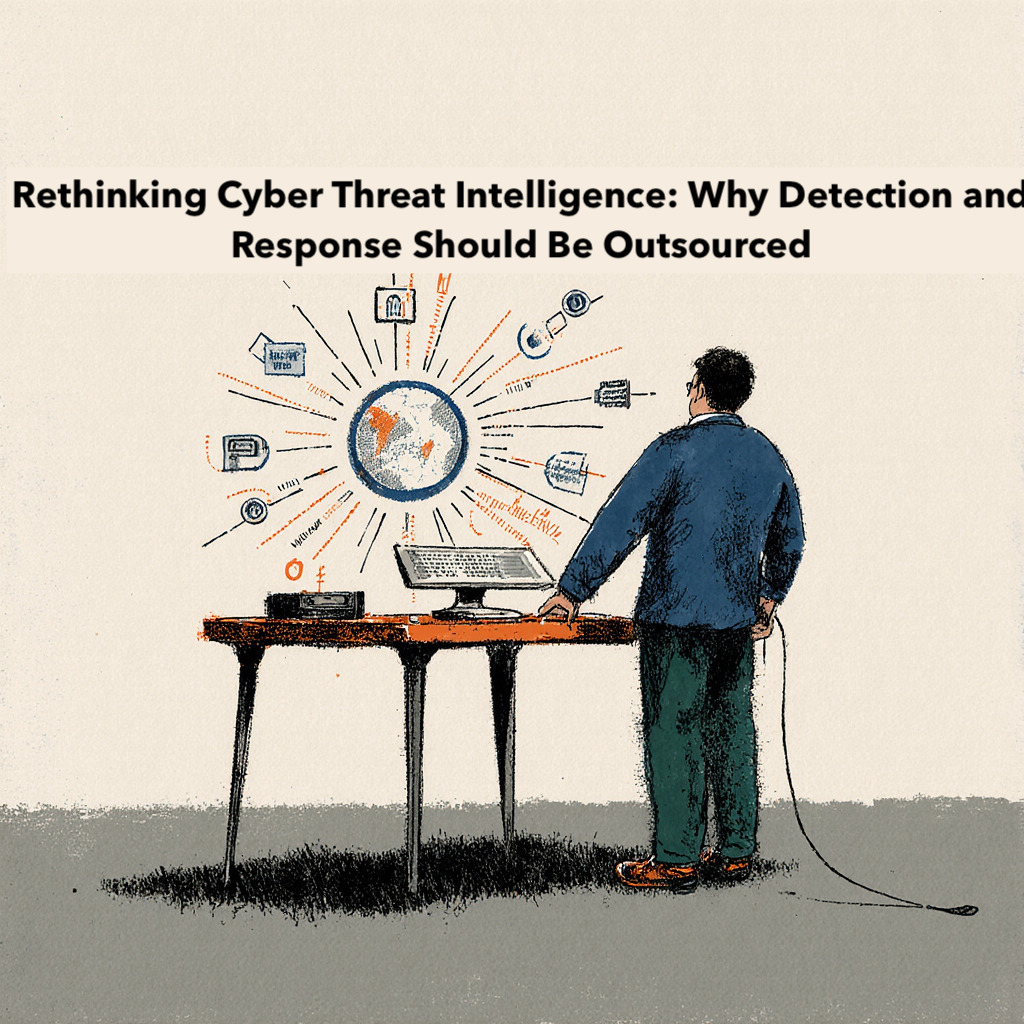
Why Internal Security Teams Are No Longer Enough
Cyber threats are evolving faster than most organizations can adapt. Attack surfaces are expanding with cloud adoption, remote work, and interconnected systems. This creates a critical gap between detection speed and response capability.
For many enterprises, building an in-house Security Operations Center (SOC) is no longer sufficient. The challenge is not just technology. It is also talent, scalability, and continuous monitoring.
Outsourcing cyber threat detection and response is becoming a strategic decision, not just an operational one. It allows organizations to leverage specialized expertise and advanced tooling without the overhead of building everything internally.
The Challenge: Visibility, Speed, and Expertise
Modern cyber threats are complex and persistent. Organizations face several core challenges:
- Limited 24/7 monitoring capabilities
- Shortage of skilled cybersecurity professionals
- Increasing alert fatigue and false positives
- Difficulty correlating global threat intelligence
According to Gartner, a large percentage of security incidents are either missed or detected too late due to insufficient monitoring and response capabilities.
Additionally, frameworks like the NIST Cybersecurity Framework emphasize the importance of continuous detection and response. Without dedicated expertise, maintaining this level of maturity is difficult.
The Strategic Approach to Threat Detection and Response
A mature cybersecurity strategy integrates threat intelligence with detection and response capabilities.
This includes:
- Continuous monitoring of network and endpoints
- Integration of global threat intelligence feeds
- Automated detection using AI and machine learning
- Rapid incident response and containment
The goal is not only to detect threats but to reduce dwell time - the time an attacker remains undetected inside a system.
Organizations following best practices from frameworks like NIST and ISO 27001 prioritize proactive detection over reactive responses.

Why Outsourcing Makes Strategic Sense
Outsourcing to a specialized provider transforms cybersecurity from a cost center into a scalable service.
Key advantages include:
-
Access to specialized expertise Security analysts and threat hunters with deep domain knowledge
-
24/7 monitoring and global coverage Continuous detection across time zones
-
Advanced tooling and automation AI-driven detection systems and threat correlation engines
-
Scalability and flexibility Easily scale resources based on business needs
-
Cost efficiency Avoid the high cost of building and maintaining an internal SOC
According to McKinsey, organizations that adopt managed security services often achieve faster incident response times and improved threat visibility.
Technology and Delivery Models
Outsourced detection and response is typically delivered through:
- Managed Detection and Response (MDR)
- Security Operations Center (SOC) as a Service
- Threat Intelligence Platforms (TIPs)
- Extended Detection and Response (XDR) solutions
These models combine:
- Endpoint detection
- Network traffic analysis
- Behavioral analytics
- Threat intelligence enrichment
The integration of these layers allows for faster and more accurate detection of anomalies.
Risks and Trade-Offs
While outsourcing offers clear advantages, it also introduces considerations:
- Dependency on third-party providers
- Data privacy and compliance requirements
- Integration with existing systems
- Vendor lock-in risks
Organizations must carefully evaluate providers based on compliance with standards such as ISO 27001 and adherence to EU data protection regulations like GDPR.
A well-structured Service Level Agreement (SLA) is critical to ensure accountability and performance.

Industry Insight: The Shift Toward Managed Security
Industry reports consistently show a shift toward outsourced cybersecurity models.
According to IBM’s Cost of a Data Breach Report, organizations with fully deployed security automation and response capabilities detect and contain breaches significantly faster and at lower cost compared to those without.
Additionally, NIST highlights that effective detection and response is a core pillar of cybersecurity maturity.
This trend is particularly strong in Europe, where regulatory requirements and talent shortages are driving demand for external expertise.
Euro IT Sourcing Perspective
From our experience working with European technology-driven organizations, the need for specialized cybersecurity talent continues to outpace supply.
We observe three consistent patterns:
- Enterprises struggle to maintain 24/7 SOC coverage internally
- Security teams are overwhelmed by alert volumes
- Organizations are shifting toward hybrid and outsourced models
Outsourcing threat detection and response allows organizations to:
- Maintain continuous monitoring without increasing internal headcount
- Access experienced cybersecurity professionals
- Leverage advanced tools without heavy capital investment
This approach aligns well with modern enterprise strategies focused on efficiency, scalability, and resilience.
Results and Business Impact
Organizations that outsource detection and response typically achieve measurable improvements:
-
Faster incident detection Reduced dwell time through continuous monitoring
-
Improved response times Immediate containment and mitigation
-
Cost optimization Lower operational and staffing costs compared to internal SOCs
-
Enhanced compliance Alignment with frameworks such as ISO 27001 and NIST
-
Greater resilience Stronger defense against evolving cyber threats
Benchmarks from industry studies show that mature detection and response programs can significantly reduce the financial impact of breaches.
Key Takeaways
- Cyber threats are too complex and fast for many internal teams to manage alone
- Outsourcing improves detection speed, accuracy, and coverage
- Managed services provide access to specialized expertise and advanced tools
- Compliance and security frameworks support outsourcing as a best practice
- A hybrid approach often delivers the best balance of control and efficiency
Author & Contact
Author: Matt Borekci https://www.linkedin.com/in/matt-borekci
Contact Us: https://www.euroitsourcing.com/en/contact

The Most In-Demand Outsourced IT Roles in 2025: Key Trends & Insights
Discover the top outsourced IT roles in 2025 and explore why companies are choosing these positions to enhance scalability and efficiency.

Outsourcing Cyber Security: Benefits of Hiring Experts from Euro IT Sourcing
Outsourcing cyber security helps enterprises reduce risk, access scarce expertise, and scale protection faster in an evolving threat landscape.