Silver: The Strategic Metal of the Electric Age
- 1 min read
Why silver is critical in 2026: industrial demand, EVs, semiconductors, green energy, and whether silver is the most undervalued metal today.
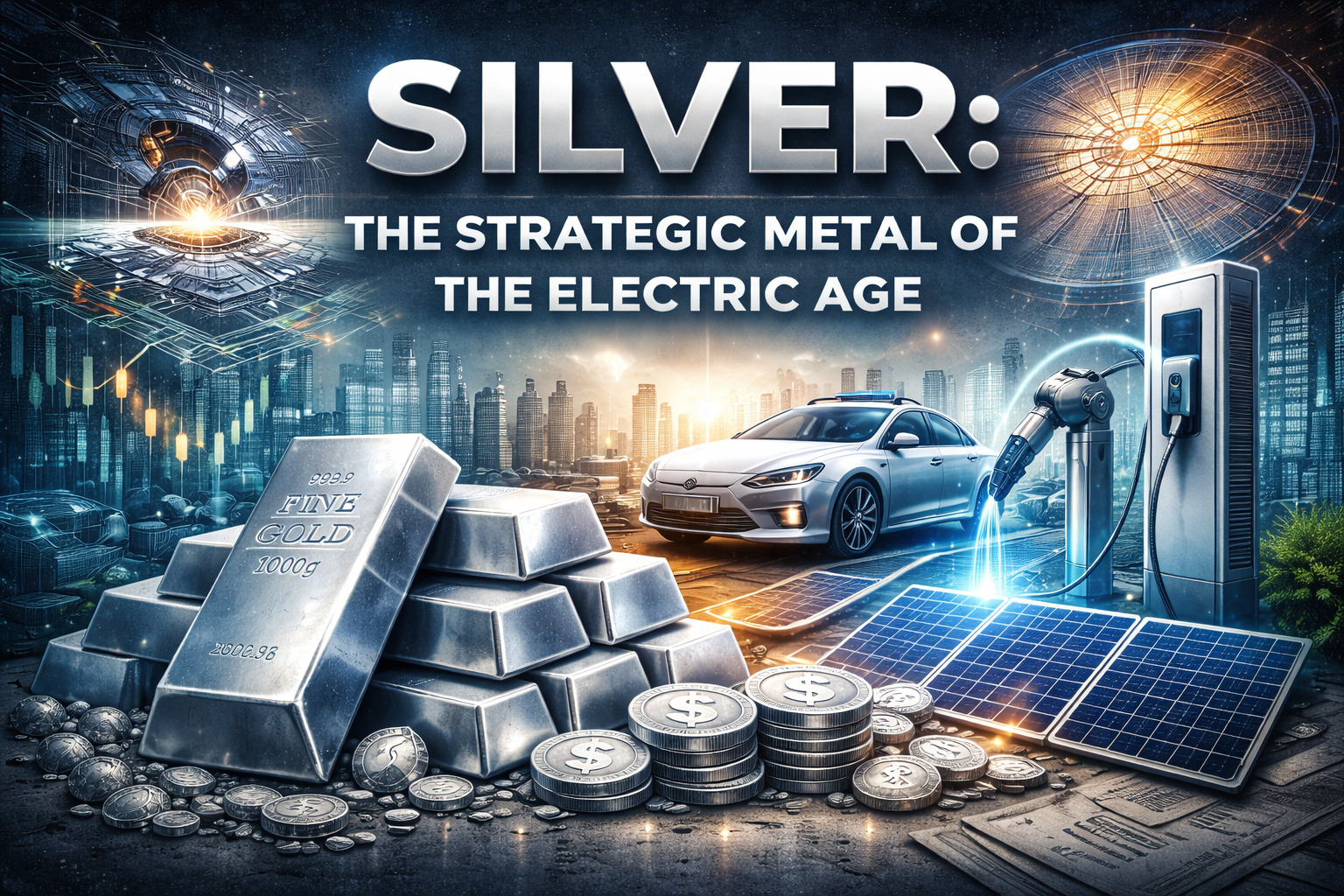
Why Silver Is More Than “Cheap Gold” in 2026
Introduction
Recent movements in silver prices have once again brought an old but often misunderstood asset back into focus. While gold is widely discussed as a store of value, silver occupies a far more complex position in the global economy, sitting at the intersection of money, industry, and technology.
Historically, silver has served as currency, collateral, and a monetary metal alongside gold. But unlike gold, silver never stopped being useful. In fact, as we move deeper into the age of electrification, automation, and electric vehicles, silver’s industrial relevance is accelerating.
To understand silver’s role in 2026, we need to look beyond price charts and revisit why silver exists in portfolios at all.
Part 1: Why Silver?
The Most Conductive Metal Humanity Uses
Like gold, silver has been valued for thousands of years. But unlike gold, silver’s modern importance is not driven primarily by psychology or tradition, it is driven by physics.
Silver is:
- The best electrical conductor of all metals
- The best thermal conductor
- Highly reflective
- Chemically stable
These properties make silver irreplaceable in many applications.
A Metal We Could Work With Early
Just like gold, silver had a melting point and workability that ancient civilizations could handle. This made it suitable for coins, jewelry, and early trade systems long before advanced metallurgy existed.
Scarcity With Utility
Silver is more abundant than gold, but still scarce enough to retain value. Crucially, however, silver is consumed, not just stored. Much of the silver mined throughout history has been lost in industrial processes, landfills, and unrecoverable applications.
This makes silver fundamentally different from gold:
- Most gold ever mined still exists
- A large portion of historical silver does not
Part 2: Silver Is Not Just a Monetary Metal
It’s an Industrial Input
Calling silver “poor man’s gold” is one of the most misleading clichés in finance.
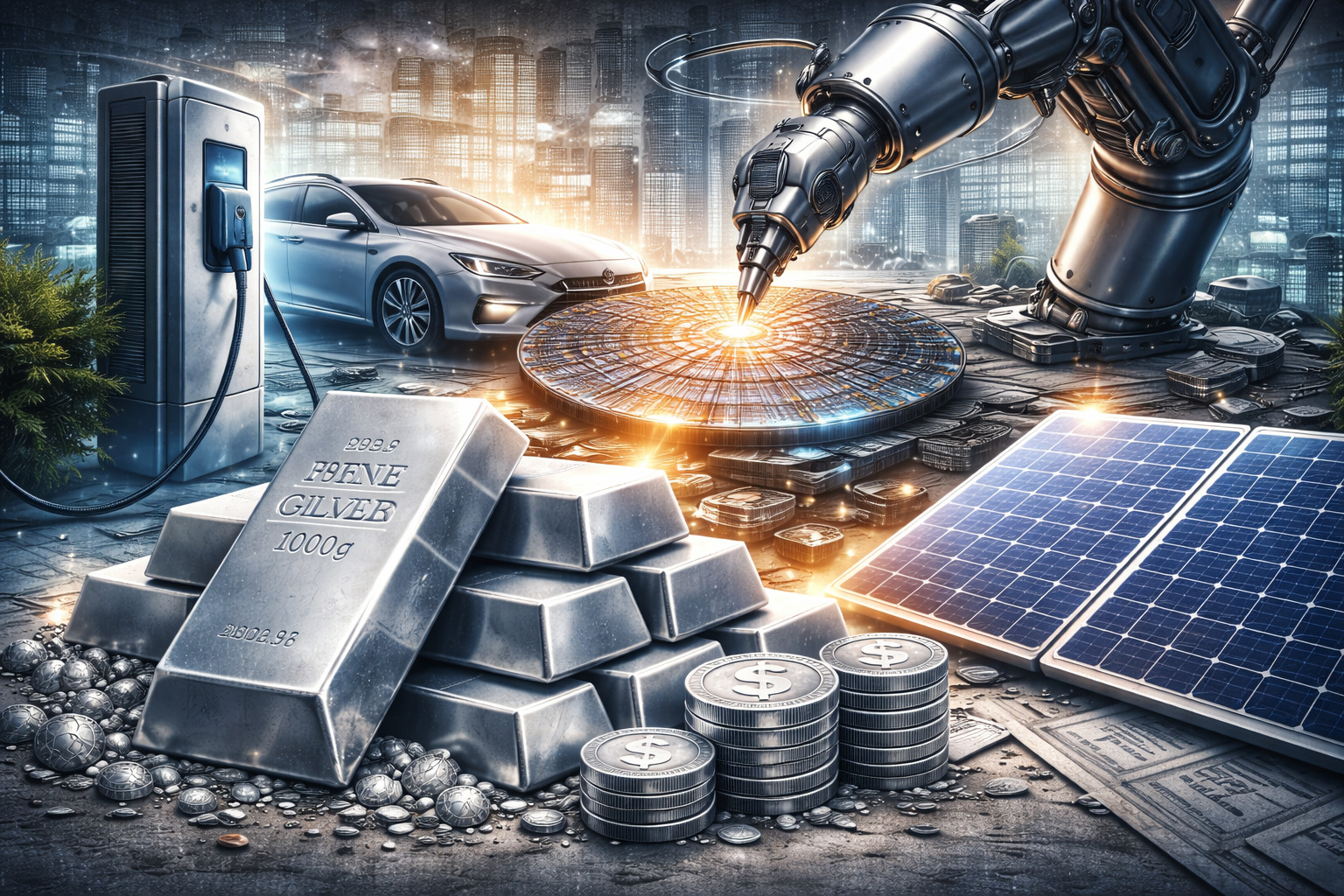
Unlike gold, over half of annual silver demand comes from industrial use, including:
1. Electric Vehicles (EVs)
Electric vehicles use significantly more silver than internal combustion cars. Silver is critical in:
- Power electronics
- Battery management systems
- Charging infrastructure
- Electrical contacts and switches
As EV adoption accelerates globally, silver demand scales structurally, not cyclically.
2. Semiconductors and Chips
Modern chips rely on silver-based pastes and conductive materials for:
- High-speed signal transmission
- Heat management
- Reliability under extreme conditions
As chips become smaller, faster, and more energy-efficient, conductivity margins matter more, and silver remains unmatched.
3. Solar Panels and Renewable Energy
Silver is a key component in photovoltaic cells. Even with efficiency improvements, total silver demand from solar continues to rise due to sheer volume growth.
4. Medical and High-Tech Applications
Silver’s antimicrobial properties make it valuable in:
- Medical devices
- Water purification
- Advanced coatings
Silver is not optional in these sectors. It is embedded.
Part 3: Can Silver Be Manipulated?
Yes and That’s the Point
Like gold, silver trades on futures markets, is influenced by dollar strength, and is subject to speculative flows. However, silver’s smaller market size makes it far more volatile.
This volatility often leads to:
- Sharp retail-driven spikes
- Aggressive corrections
- Long periods of suppression
But here’s the key difference:
Industrial demand does not care about sentiment.
Manufacturers buy silver because they must. EV factories, chip fabs, and solar producers do not wait for “better entry points.” Over time, this creates a structural floor under demand.
Silver can be pushed around in the short term. But long-term, physics wins.
Part 4: Does Silver Have a Fair Value?
More Complicated Than Gold
Silver’s fair value is harder to model than gold’s because it has two personalities:
- Monetary metal
- Industrial commodity
Some commonly used indicators include:
- Gold-to-silver ratio
- Industrial production growth
- Renewable energy capacity expansion
- Real interest rates
Historically, when industrial demand accelerates while monetary conditions remain loose, silver tends to outperform gold, often violently.
However, this comes with higher volatility and deeper drawdowns.
Silver rewards patience. And punishes leverage.
Part 5: Diversification Still Matters
Silver Is Not a One-Trade Thesis
Silver has strong tailwinds:
- Electrification
- Energy transition
- Chip demand
- EV adoption
But it also carries risks:
- Economic slowdowns reduce industrial demand
- Technological substitution (over very long horizons)
- High price volatility
As with gold, the principle remains unchanged:
Don’t put all your eggs in one basket.
Silver complements gold. It does not replace it.
Part 6: Missed the Silver Rally?
There’s Still Asymmetry Elsewhere 😉
Silver may already be repricing itself as an industrial metal of the future. But one thing hasn’t yet undergone a full revaluation:
Highly skilled Eastern European developers.
Just like silver, they sit quietly inside critical systems—EV software, embedded systems, fintech infrastructure—doing the real work while being systematically undervalued.
If you’re building something real in 2026, this asymmetry still exists.
Silver powers the hardware. Great developers power everything else.
Get in touch before the market catches up.
Author and Contact
Author: Matt Borekci Contact Us: Euro IT Sourcing

Turkish Tech Renaissance: The Remarkable Growth of the IT Industry
Turkey's IT industry is rapidly growing, driven by its strategic geographic location, a young and educated workforce, and strong government support. The country's thriving startup ecosystem, emphasis on digital transformation, and increasing IT exports are positioning Turkey as a significant player in the global technology landscape. This growth trajectory highlights Turkey's potential and ambition in shaping the future of technology both domestically and internationally.

TURKIYE: The Rising Star of IT Outsourcing
Turkey is quickly becoming a key player in the IT outsourcing industry, thanks to its strategic location, skilled workforce, and cost-effective solutions. Positioned between Europe and Asia, Turkey offers businesses access to top-tier IT talent at competitive prices, with minimal language and cultural barriers. The country's commitment to data protection and innovation further enhances its appeal as a reliable and cutting-edge IT outsourcing partner.