The Essential Cyber Security Checklist for Small Businesses
- 1 min read
A practical cyber security checklist to help small businesses reduce risk, protect data, and build a strong security baseline in 2025.

Introduction
Cyber attacks no longer target only large enterprises. Small businesses are now among the most frequent victims, often due to limited security budgets and lack of internal expertise.
A single security incident can lead to data loss, operational downtime, regulatory penalties, and reputational damage. For smaller organizations, recovery is often slow and costly.
This checklist focuses on practical, high-impact cyber security measures that small businesses can realistically implement. It reflects the fundamentals seen across successful security programs in today’s European IT landscape.
The Challenge: Why Small Businesses Are Vulnerable
Small organizations face unique cyber security challenges:
- Limited in-house security expertise
- Overreliance on default system configurations
- Growing use of cloud and remote work tools
- Increasingly sophisticated phishing and ransomware attacks
According to ENISA, small and medium-sized enterprises remain a primary target due to weaker defensive maturity compared to large enterprises.
Reference: https://www.enisa.europa.eu
The Approach: A Checklist-Driven Security Baseline
Rather than complex security architectures, small businesses benefit most from clear, repeatable controls that reduce common attack vectors.
An effective cyber security checklist should:
- Focus on prevention first
- Prioritize high-risk areas
- Be easy to audit and maintain
- Scale as the business grows
This approach aligns with international guidance such as the NIST Cybersecurity Framework.
Reference: https://www.nist.gov
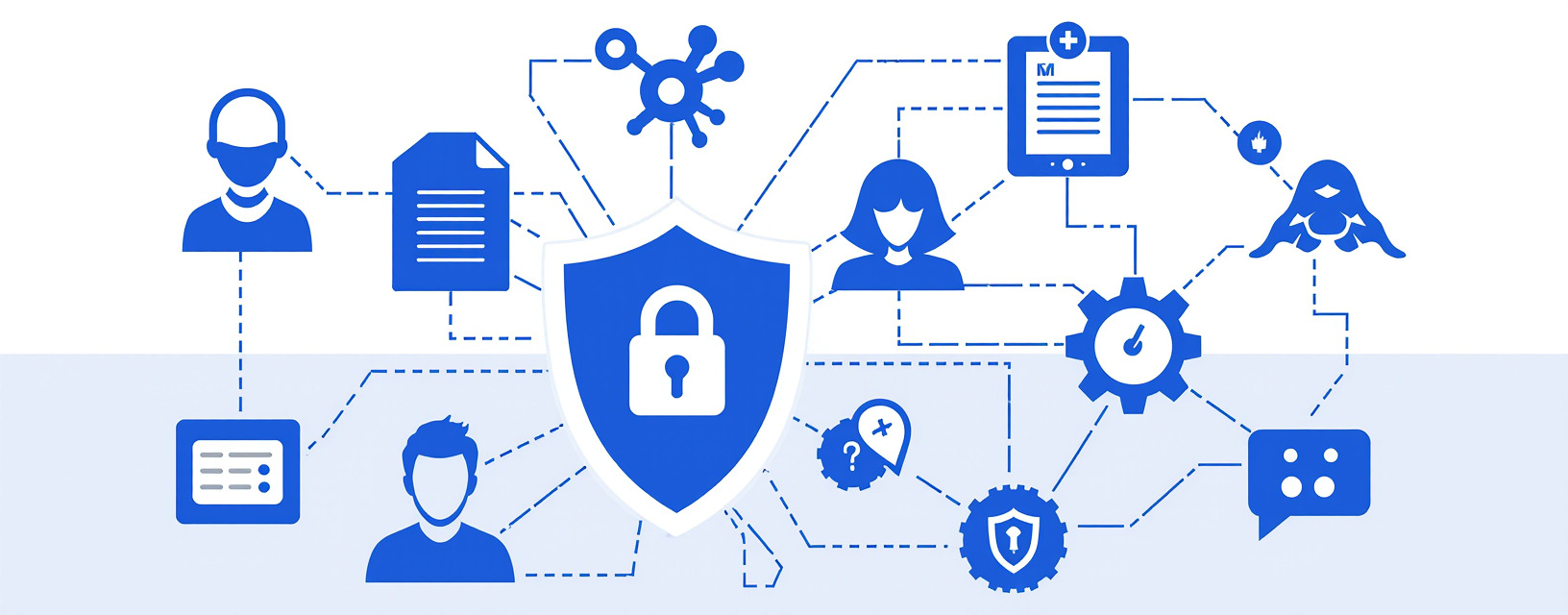
Essential Cyber Security Checklist for Small Businesses
1. Secure Access and Identity Management
Weak or reused credentials remain a top cause of breaches.
Key actions:
- Enforce strong password policies
- Enable multi-factor authentication for all critical systems
- Remove access immediately when employees leave
- Apply role-based access control
2. Protect Endpoints and Devices
Every laptop, desktop, and mobile device is a potential entry point.
Checklist items:
- Use centrally managed antivirus and endpoint protection
- Enable automatic OS and application updates
- Encrypt laptops and portable devices
- Restrict local administrator privileges
3. Secure Networks and Wi-Fi
Unsecured networks expose internal systems to attackers.
Best practices:
- Use firewalls with default-deny rules
- Separate guest and corporate Wi-Fi networks
- Disable unused ports and services
- Monitor unusual network activity
4. Safeguard Data and Backups
Data protection is critical for both security and compliance.
Must-have controls:
- Regular automated backups
- Store backups offline or in a separate environment
- Test data restoration procedures
- Classify and limit access to sensitive data
5. Defend Against Phishing and Social Engineering
Human error remains one of the biggest cyber risks.
Preventive measures:
- Provide basic security awareness training
- Use email filtering and spam protection
- Verify payment and access requests through secondary channels
- Report and analyze suspicious emails
6. Patch and Update Systems Regularly
Unpatched systems are an easy target for attackers.
Checklist:
- Maintain an asset inventory
- Apply critical security patches promptly
- Remove unsupported software
- Monitor vulnerability advisories
7. Establish an Incident Response Plan
Preparation reduces panic and downtime during incidents.
Minimum requirements:
- Define roles and escalation paths
- Document response steps for common incidents
- Identify external partners and authorities
- Review and update the plan annually
Industry Insight
IBM’s Cost of a Data Breach Report consistently shows that organizations with basic security hygiene and incident response planning significantly reduce breach costs and recovery time.
For small businesses, simplicity and consistency outperform complex security stacks. A well-executed checklist often delivers better results than fragmented, ad-hoc controls.
Reference: https://www.ibm.com/security
Euro IT Sourcing Perspective
From our experience working with European small and mid-sized businesses, the most effective security improvements come from structured fundamentals rather than expensive tools.
Organizations that follow a clear checklist approach typically gain faster visibility into risks, stronger operational resilience, and improved confidence when dealing with customers and partners.
Cyber security maturity is built step by step, and a strong baseline creates the foundation for future growth.
Results and Impact
Small businesses implementing a structured cyber security checklist commonly achieve:
- Reduced exposure to phishing and ransomware attacks
- Faster recovery times after incidents
- Improved compliance readiness
- Higher trust from customers and partners
- Lower long-term security costs
These outcomes demonstrate that cyber security is not just a technical requirement, but a business enabler.
Key Takeaways
- Small businesses are prime targets for cyber attacks
- A checklist-based approach delivers fast, measurable risk reduction
- Identity, endpoints, and backups are top priorities
- Human awareness is as important as technical controls
- Strong fundamentals enable scalable cyber security maturity
Author and Contact
Author: Matt Borekci
Contact Us: Euro IT Sourcing
Image Prompts
Cover Image Prompt
Professional horizontal (16:9) image featuring the blog title "The Essential Cyber Security Checklist for Small Businesses", showing a secure digital workspace, shield icons, network connections, and a European business setting. Clean, modern, and premium look with no text overlay.
In-Content Image Prompt
Modern infographic-style image illustrating a cyber security checklist with icons for passwords, devices, network security, backups, phishing protection, and incident response. Minimalist, vector-style, blue-grey tones, suitable for a B2B blog.
What Does a Cyber Security Expert Do? A Complete Guide
Discover what a cyber security expert does, their roles, skills, and how they protect businesses from digital threats.

How Much Does a Cyber Security Expert Earn? Salary Insights for 2025
Explore 2025 cybersecurity salary trends, including global averages, roles in demand, and how outsourcing impacts IT security hiring.