The Future of ICT Outsourcing: Predictions for 2026
- 1 min read
Explore major ICT outsourcing trends shaping 2026 - from AI integration to strategic talent sourcing for European enterprises.
Why Forward-Looking IT Sourcing Matters More Than Ever
Enterprises scaling digital operations today face unprecedented pressure on time to value. ICT outsourcing is no longer just a cost lever; it is a strategic enabler for innovation and resilience. In 2026, that reality will be even more pronounced.
Regulatory complexity in Europe, hybrid workforce expectations, and rising demand for AI-native capabilities are altering how technology leaders source external teams and expertise. European CTOs must anticipate changes now or risk strategic misalignment.
This forecast is not about buzzwords. It reflects structural shifts in how organizations build and operate technology capabilities at scale.
The Challenge: Traditional Outsourcing Models Cannot Keep Up
For years, many enterprises relied on transactional outsourcing engagements with fixed scopes and rigid SLAs. That model is increasingly misaligned with modern IT demands:
- Deliverables are less predictable as software moves toward continuous release cycles
- Cost pressures are compounded by inflation and talent scarcity
- Data protection regimes such as GDPR add sourcing complexity across borders
Research from leading analysts highlights that legacy outsourcing often undermines agility and innovation if not fundamentally restructured - see Gartner on outsourcing transformation frameworks. (https://www.gartner.com)
What Stagnation Looks Like
- Long onboarding cycles for external teams
- Disparate delivery quality across geographies
- Limited integration between outsourced and internal teams
Without evolution, these challenges compound over time and erode competitive positioning.
Strategic Approaches Rewriting ICT Outsourcing in 2026
From Transactional to Transformational Partnerships
Forward-looking sourcing frameworks emphasize strategic alignment and shared outcomes:
- Joint roadmap planning with external partners
- Transparent metrics grounded in business outcomes
- Co-investment in capability development
This goes beyond traditional SLA compliance. It aligns with enterprise digital transformation best practices outlined by McKinsey on modern operating models. (https://www.mckinsey.com)
Hybrid Delivery Models at Scale
Remote and distributed teams remain essential. But hybrid models that combine onshore governance with offshore or nearshore execution are emerging as a dominant pattern:
- Core architects or lead engineers embedded with internal teams
- Distributed squads handling modular components
- Local compliance and data governance leads integrated into delivery
This structure balances control, quality, and cost efficiency.
Technology and Delivery Dynamics Reshaping Outsourcing
AI and Automation as Delivery Multipliers
Artificial intelligence is not just a tooling trend; it is reshaping how outsourcing organizations deliver value:
- Intelligent code generation accelerates development cycles
- Predictive analytics improves risk and quality forecasting
- Automated testing reduces manual effort and cost
By 2026, teams that embed AI into end-to-end delivery will outperform peers on velocity and predictability.
Talent Strategy Meets Capability Strategy
The outsourcing conversation shifts from “labor cost arbitrage” to “capability scaling.” European enterprises are sourcing external specialists not just for execution but for strategic capability infusion:
- Cloud architects with European compliance experience
- Security engineers versed in NIST and ISO frameworks
- Data scientists familiar with cross-border data governance
This trend is especially visible in sectors with strict regulation like finance and healthcare.

Risks and Trade-Offs: What Leaders Must Consider
Outsourcing in 2026 is more strategic but not without risks:
- Governance complexity increases with hybrid delivery footprints
- Vendor lock-in can arise from overly bespoke integrations
- Security oversight must be elevated with broader external touchpoints
Risk frameworks from ISO 27001 and EU cybersecurity policy serve as essential guardrails for enterprise sourcing strategies. (https://www.iso.org)
Industry Insight
Current industry data points to the following shifts:
- Enterprises with integrated sourcing strategies report faster time to market and higher innovation rates
- Outsourcing engagements increasingly tie compensation to business outcomes rather than hours or activity
- Hybrid work norms accelerate demand for nearshore sourcing in Europe to support cultural affinity and overlap
These insights align with broad industry research on next-gen IT operating models.
From Our Experience with European Technology Organizations
From our work with European technology-driven organizations, a few consistent patterns emerge:
- Leaders prioritizing strategic outsourcing align external teams to internal engineering culture early
- Transparency in collaboration tools and delivery rhythms correlates with higher project success
- Organizations that treat sourcing partners as extensions of internal teams see better retention and knowledge sharing
We observe that outcome-oriented frameworks outperform traditional task-based models in sustaining transformation.
Expected Impact by End of 2026
The most mature organizations adopting next-generation ICT outsourcing will likely see measurable impact:
- 20-40 percent reduction in cost per delivered capability
- 30 percent faster time from concept to deployment
- Lower operational risk through embedded compliance expertise
These results align with broader enterprise benchmarking for strategic outsourcing models.
Key Takeaways
- ICT outsourcing in 2026 is strategic, not transactional
- Hybrid delivery models enable flexibility and resilience
- AI integration is a force multiplier for outsourcing productivity
- Risk management and compliance must be built into sourcing frameworks
- Outcome-based engagements drive long-term value
Author: Matt Borekci https://www.linkedin.com/in/matt-borekci
Contact Us: https://www.euroitsourcing.com/en/contact

The Impact of AI Tools on IT Workforce and Outsourcing Business
AI tools are revolutionizing the IT workforce and outsourcing industry by enhancing productivity and reshaping traditional models. In software development, tools like GitHub Copilot and Jira streamline coding and project management, allowing workers to be more efficient. As AI augments skill sets, businesses are increasingly seeking skilled professionals from regions like Eastern Europe, offering a balance of quality and cost-effectiveness. While India remains a key player in outsourcing, the rise of AI makes other markets, particularly in Eastern Europe and emerging regions, more competitive. This evolution promises to further reshape global outsourcing dynamics in the coming years.
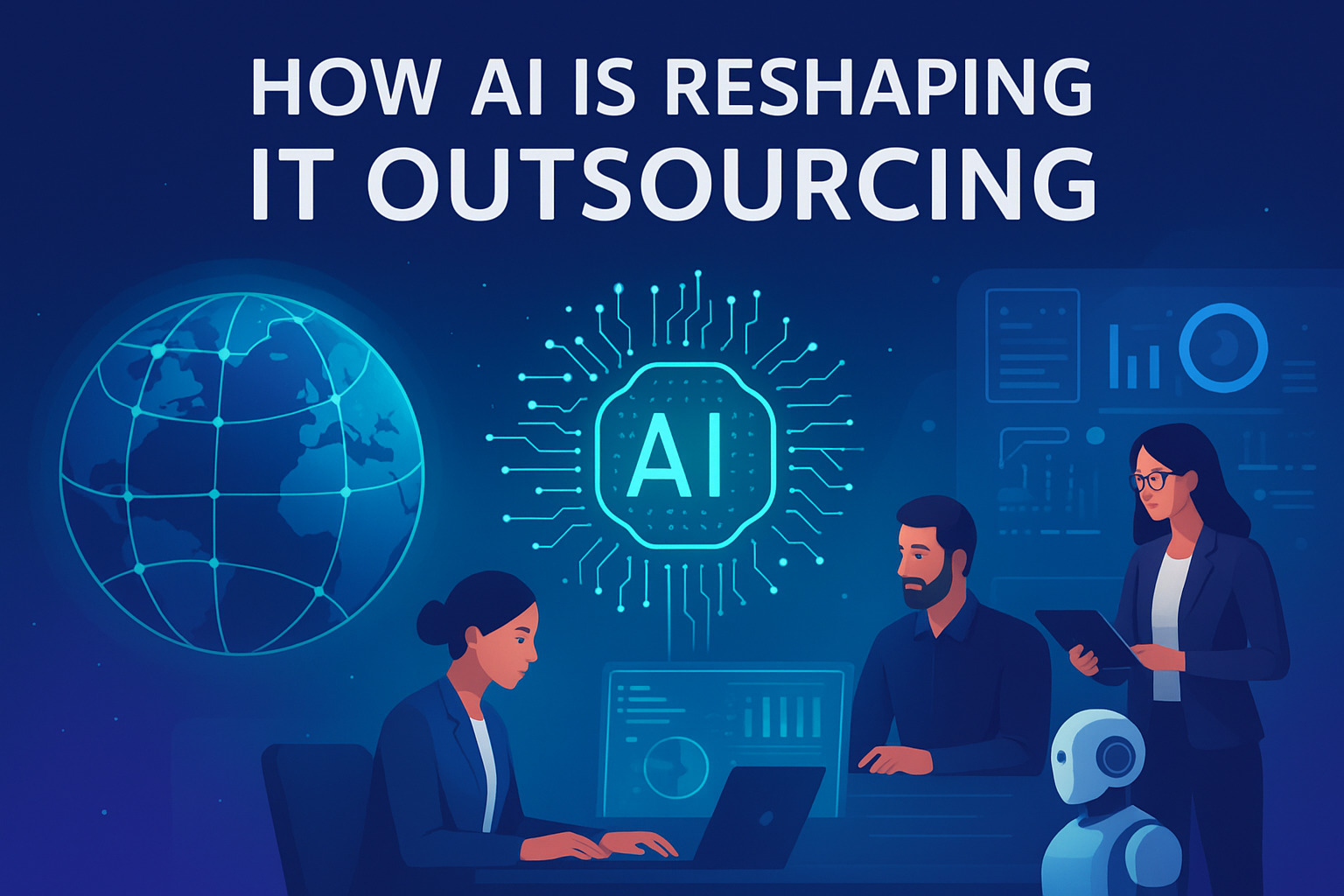
How AI is Reshaping IT Outsourcing: From Cost Savings to Strategic Advantage
Discover how AI is transforming IT outsourcing—driving efficiency, reducing costs, and enabling companies to focus on strategic growth.