When to Hire a Cyber Security Expert: Key Warning Signs for Businesses
- 1 min read
Learn when to hire a cyber security expert by identifying key warning signs that put your business data, systems, and compliance at risk.

Introduction
Cyber threats are no longer limited to large enterprises or tech companies. Mid-sized and growing businesses are now prime targets due to expanding digital footprints and limited internal security resources.
Many organizations delay hiring a cyber security expert until after a serious incident occurs. By then, the cost of recovery, reputational damage, and regulatory exposure is significantly higher.
Understanding early warning signs allows business leaders to act proactively, protect critical assets, and build resilience before a breach disrupts operations.
The Growing Challenge of Cyber Risk for Businesses
Modern IT environments are more complex than ever. Cloud platforms, remote work, third-party vendors, and rapid software delivery increase the attack surface dramatically.
Common challenges include:
- Limited in-house security expertise
- Outdated security policies and controls
- Increasing regulatory pressure
- Lack of visibility into real-time threats
Without expert oversight, small gaps can quickly turn into enterprise-level security incidents.
Key Warning Signs You Need a Cyber Security Expert
Repeated Security Incidents or Near Misses
If your organization experiences:
- Frequent phishing attempts reaching employees
- Malware detections or suspicious system behavior
- Unauthorized access alerts without clear root cause
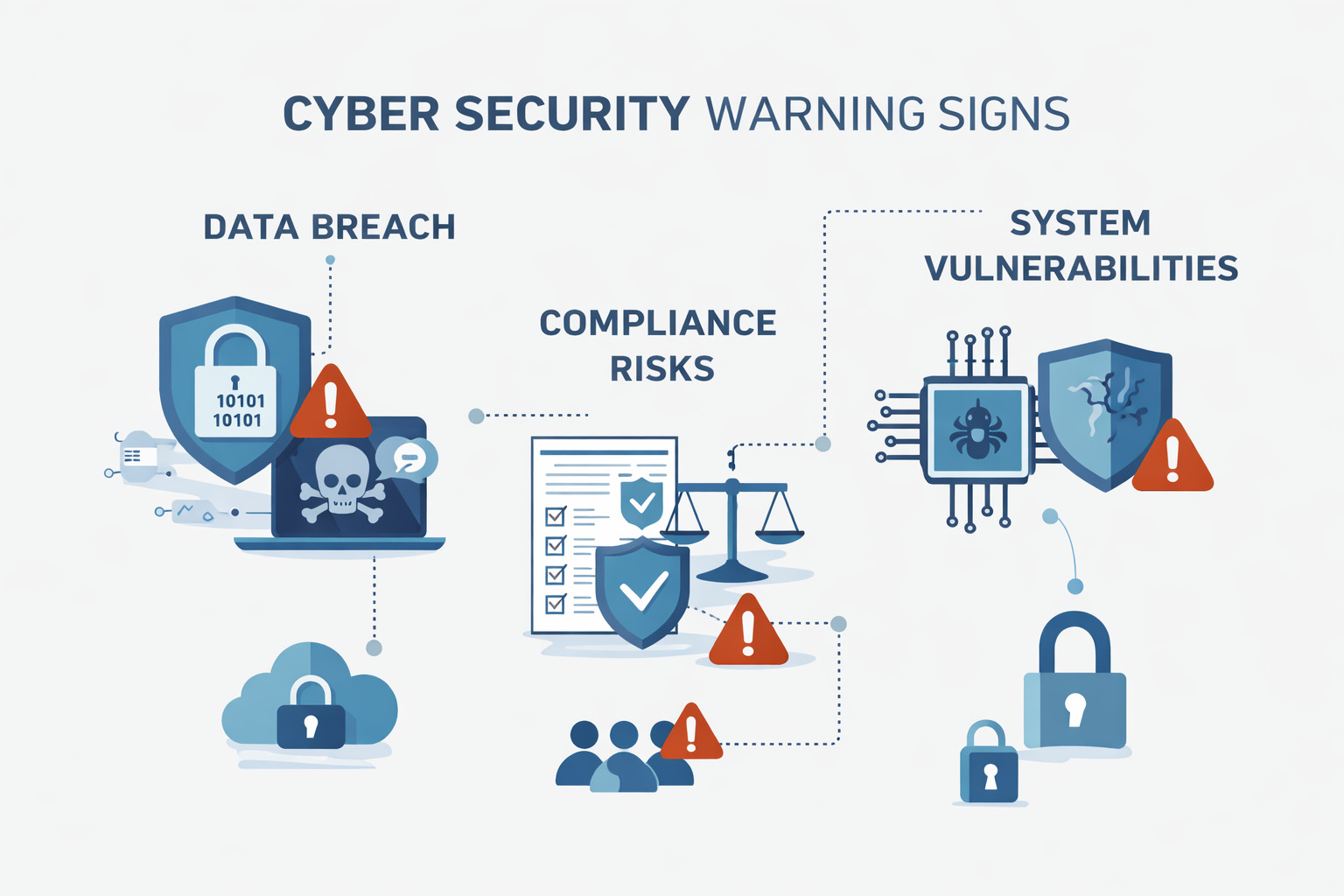
These are strong indicators that existing controls are insufficient and require expert evaluation.
Lack of a Formal Security Strategy
Businesses operating without:
- A documented cyber security roadmap
- Defined incident response procedures
- Regular risk assessments
Are often reacting to threats instead of preventing them. A cyber security expert brings structure, prioritization, and accountability to security initiatives.
Rapid Business or Technology Growth
Fast growth introduces risk when security does not scale alongside operations.
Common triggers include:
- Cloud migrations or multi-cloud adoption
- Expansion into new markets
- Integration of third-party systems or vendors
Security experts help align growth with secure architecture and governance models.
Compliance and Regulatory Pressure
If your business handles personal or sensitive data, regulatory exposure is unavoidable.
This includes frameworks such as:
- GDPR
- ISO 27001
- NIST Cybersecurity Framework
Failure to meet requirements can result in fines, audits, and loss of client trust. Expert guidance ensures compliance is built into processes, not treated as an afterthought.
References:
Overreliance on IT or Development Teams
IT and development teams are critical, but security is a specialized discipline.
Warning signs include:
- Developers managing security policies informally
- IT teams stretched between operations and incident response
- No dedicated ownership of security controls
A cyber security expert complements existing teams by focusing on risk management and threat mitigation.
The Technology Factor in Modern Cyber Security
Effective cyber security goes beyond tools alone.
Experts help organizations:
- Select and configure security platforms correctly
- Integrate monitoring, detection, and response
- Align security tooling with business priorities
Without expert oversight, even advanced tools may be underutilized or misconfigured.
Industry Insight
According to Gartner, human error and misconfiguration remain among the leading causes of security breaches, even in organizations with strong tooling.
McKinsey research also shows that companies investing early in cyber security expertise reduce breach-related costs and recover faster when incidents occur.
References:
Euro IT Sourcing Perspective
From our experience working with European tech firms, companies that engage cyber security experts early gain a measurable advantage in resilience and trust.
We see increasing demand for:
- On-demand security assessments
- Fractional or project-based security leadership
- Integrated security expertise within delivery teams
Rather than hiring reactively, leading organizations treat cyber security as a strategic capability, not just a technical requirement.
Results and Business Impact
Organizations that involve cyber security experts at the right time typically achieve:
- Reduced incident response time
- Improved audit and compliance readiness
- Lower long-term security costs
- Increased confidence from clients and partners
These outcomes directly support business continuity and sustainable growth.
Key Takeaways
- Repeated incidents signal deeper security gaps.
- Growth without security alignment increases risk.
- Compliance requires expert interpretation and execution.
- Security tools alone are not enough.
- Early expert involvement lowers long-term costs and exposure.
Author & Contact
Author: Matt Borekci
Contact Us: Euro IT Sourcing
What Does a Cyber Security Expert Do? A Complete Guide
Discover what a cyber security expert does, their roles, skills, and how they protect businesses from digital threats.

How Much Does a Cyber Security Expert Earn? Salary Insights for 2025
Explore 2025 cybersecurity salary trends, including global averages, roles in demand, and how outsourcing impacts IT security hiring.