Why Every Startup Needs a Cyber Security Expert from Day One
- 1 min read
Startups that embed cyber security from day one reduce risk, build investor trust, and scale faster across European digital markets.
Cyber Security Is Not a Later-Stage Problem
Most startups prioritize speed. Few prioritize security architecture from day one.
That trade-off used to be acceptable. It is no longer.
European startups operate in a highly regulated and digitally mature environment. GDPR enforcement, rising ransomware activity, and investor due diligence have changed expectations. According to the European Union Agency for Cybersecurity - ENISA, cyber threats across the EU continue to grow in both scale and sophistication. https://www.enisa.europa.eu
Security is no longer an enterprise-only concern. It is a foundational design decision for any scalable technology company.
The Core Risk: Growth Without Protection
Startups move fast. Infrastructure evolves weekly. Teams adopt cloud services rapidly. APIs connect to third-party platforms.
Without early cyber security expertise, this agility creates hidden exposure.
Common early-stage gaps include:
- Misconfigured cloud storage
- Lack of identity and access management controls
- No secure code review processes
- Absence of logging and monitoring
- Weak vendor risk assessments
These vulnerabilities often remain invisible until an incident occurs.
The cost of remediation after a breach is significantly higher than preventive design. IBM’s Cost of a Data Breach Report consistently shows that early detection and response maturity dramatically reduces impact. https://www.ibm.com/reports/data-breach
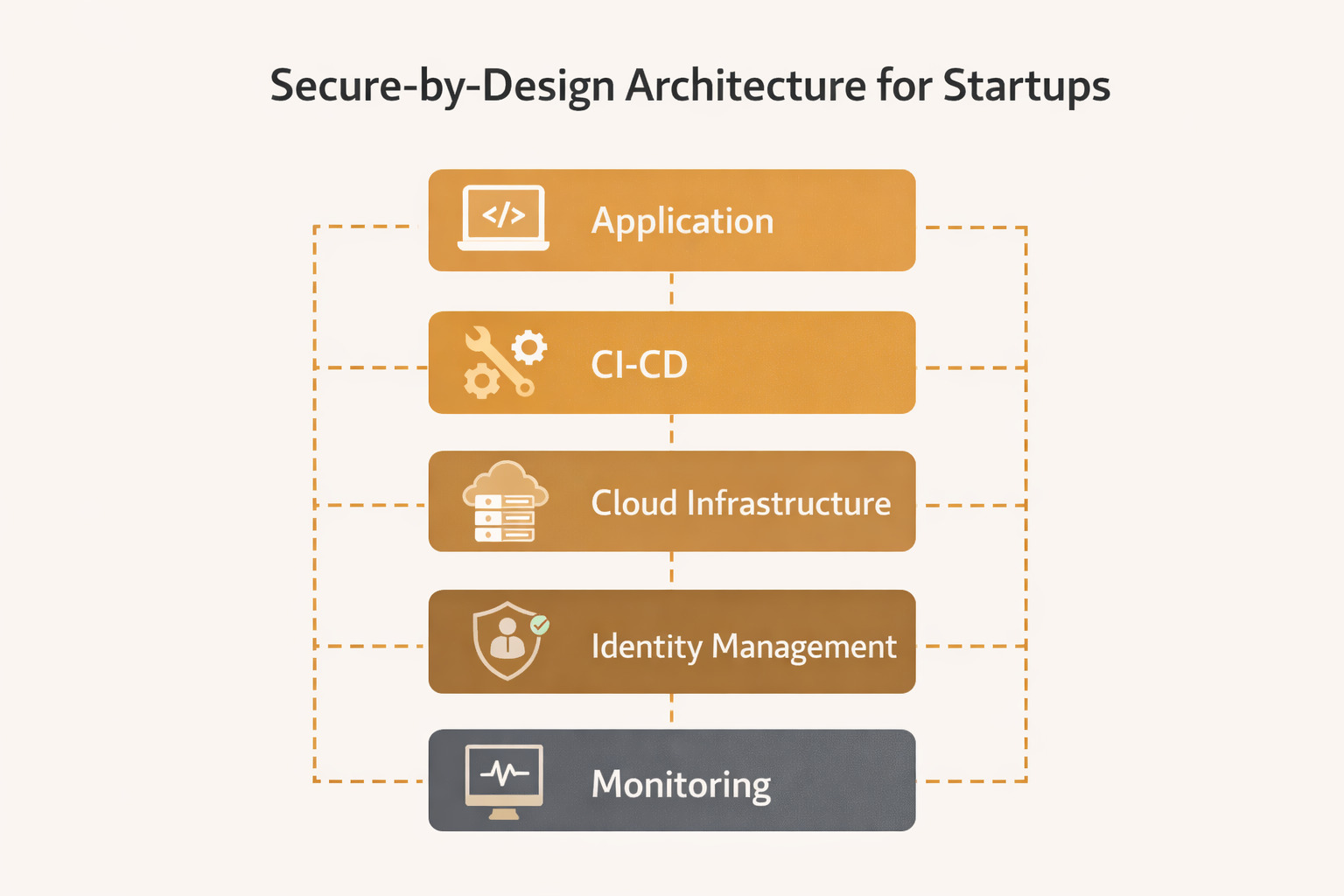
Secure by Design: The Strategic Approach
Embedding a cyber security expert from day one enables a secure-by-design mindset.
This does not mean slowing innovation. It means building guardrails that scale.
1. Architecture-Level Security
- Cloud environment hardening
- Network segmentation
- Encryption standards
- Secure API gateways
2. Secure Development Practices
- Code scanning automation
- CI-CD security integration
- Dependency vulnerability checks
- DevSecOps workflows
NIST’s Secure Software Development Framework emphasizes proactive risk management throughout the development lifecycle. https://www.nist.gov/itl/ssd
3. Compliance Readiness
European startups must consider:
- GDPR data protection obligations
- Industry-specific regulations
- ISO 27001 alignment for enterprise sales
A security expert ensures compliance becomes a competitive advantage rather than a last-minute scramble.
Investor and Enterprise Trust
Cyber security directly impacts valuation.
Venture capital firms increasingly conduct technical due diligence focused on:
- Data protection architecture
- Incident response readiness
- Access control maturity
- Documentation and governance
Enterprise customers also demand security questionnaires, penetration test results, and compliance documentation before signing contracts.
Without a cyber security expert guiding early processes, startups often lose deals due to incomplete controls rather than product weaknesses.
Security maturity accelerates revenue opportunities.
Risks of Delaying Security Leadership
Founders sometimes assume security can be outsourced later or managed part-time.
However, delaying expertise introduces compounding risks:
- Technical debt embedded into architecture
- Expensive re-engineering during scale-up
- Regulatory exposure
- Brand damage from preventable breaches
The earlier security frameworks are implemented, the lower the long-term cost.
Retrofitting security into a live production system is significantly more complex than embedding it at inception.
Industry Insight: Startups Are Prime Targets
Cybercriminals increasingly target startups because:
- Controls are weaker
- Detection capabilities are limited
- Growth-stage distraction is high
Research from ENISA and multiple European cyber threat reports indicates that small and medium-sized enterprises represent a substantial portion of ransomware victims.
Startups handling sensitive customer data are particularly vulnerable.
Security maturity is no longer optional. It is a survival factor.
Euro IT Sourcing Perspective
From our experience working with European technology-driven organizations, early-stage companies often underestimate the structural role of cyber security.
We frequently observe:
- Rapid cloud adoption without architecture governance
- Security ownership spread informally across developers
- Compliance concerns emerging only during enterprise sales discussions
When startups introduce a dedicated cyber security expert early, alignment improves across engineering, operations, and leadership.
Security becomes embedded into culture rather than treated as an external audit requirement.
Results and Business Impact
Startups that integrate cyber security expertise from day one typically experience:
- Faster enterprise customer acquisition
- Reduced incident probability
- Lower long-term infrastructure rework
- Improved investor confidence
- Stronger scalability across EU markets
The most significant impact is strategic clarity. Leadership teams gain visibility into risk exposure and can make informed growth decisions.
Security shifts from reactive defense to proactive enablement.
Key Takeaways
- Cyber security is a foundational startup capability, not a later-stage add-on
- Secure-by-design architecture reduces long-term cost and risk
- Compliance readiness strengthens investor and enterprise trust
- DevSecOps integration ensures security scales with development
- Early security leadership accelerates sustainable growth
Author & Contact
Author: Matt Borekci https://www.linkedin.com/in/matt-borekci
Contact Us: https://www.euroitsourcing.com/en/contact

Turkish Tech Renaissance: The Remarkable Growth of the IT Industry
Turkey's IT industry is rapidly growing, driven by its strategic geographic location, a young and educated workforce, and strong government support. The country's thriving startup ecosystem, emphasis on digital transformation, and increasing IT exports are positioning Turkey as a significant player in the global technology landscape. This growth trajectory highlights Turkey's potential and ambition in shaping the future of technology both domestically and internationally.

TURKIYE: The Rising Star of IT Outsourcing
Turkey is quickly becoming a key player in the IT outsourcing industry, thanks to its strategic location, skilled workforce, and cost-effective solutions. Positioned between Europe and Asia, Turkey offers businesses access to top-tier IT talent at competitive prices, with minimal language and cultural barriers. The country's commitment to data protection and innovation further enhances its appeal as a reliable and cutting-edge IT outsourcing partner.